Author: admin

  • How to Use an AED in Under 60 Seconds | Sydney CPR Guide

    How to Use an AED in Under 60 Seconds

    Sydney CPR & AED Guide | Training NSW

    When sudden cardiac arrest happens, every second matters. In busy cities like Sydney and across New South Wales, early action can mean the difference between life and death. Fortunately, learning the basic steps for using an AED in an emergency is far simpler than most people think.

    This Sydney-focused CPR and AED guide explains, step by step, how to use an AED quickly, safely, and confidently, even if you have never touched one before. Most importantly, it reflects the same practical approach taught in Training NSW’s nationally recognised CPR and First Aid courses.

    What Is an AED and Why Is It So Important?

    An AED (Automated External Defibrillator) is a portable device designed to treat sudden cardiac arrest. It works by analysing the heart rhythm and, if required, delivering a controlled electric shock to restore a normal heartbeat.

    Importantly, AEDs are:

    • Designed for public use

    • Guided by clear voice prompts

    • Safe for adults and children

    • Commonly found across Sydney and NSW


    As a result, AEDs are now standard in workplaces, childcare centres, gyms, schools, shopping centres, and transport hubs.

    What to Do When an AED Is Needed

    Step 1: Check Responsiveness and Call 000 (First 10 Seconds)

    First, check if the person is responsive by gently shaking them and calling out loudly.
    If they are unresponsive and not breathing normally:

    • Call 000 immediately

    • Ask someone nearby to bring an AED

    If you are alone, place your phone on speaker so emergency services can guide you while you act.


    Step 2: Turn the AED On Immediately (Next 5 Seconds)

    As soon as the AED arrives:

    • Open the lid or press the power button

    • The device will start giving voice instructions

    At this point, you do not need to guess what to do. Simply listen and follow the prompts.


    Step 3: Attach AED Pads Correctly (20 Seconds)

    Next:

    • Expose the person’s chest

    • Remove or cut away clothing if necessary

    • Peel off the AED pads

    Place:

    • One pad on the upper right chest

    • One pad on the lower left side of the chest

    Thankfully, diagrams on the pads clearly show correct placement.


    Step 4: Stand Clear While the AED Analyses (10 Seconds)

    Once pads are attached:

    • Loudly say “Stand clear”

    • Ensure no one is touching the person

    The AED will automatically analyse the heart rhythm.


    Step 5: Deliver Shock if Advised and Resume CPR (Final 5 Seconds)

    If the AED instructs you to shock:

    • Press the shock button when prompted

    Immediately after:

    • Resume CPR as directed by the AED

    If no shock is advised, continue CPR straight away.

    This entire AED process takes less than 60 seconds, yet it can save a life.

    Why AED Use in Sydney and NSW Saves Lives

    Across Australia, survival rates from out-of-hospital cardiac arrest remain low. However, studies consistently show that early CPR combined with rapid AED use can double or even triple survival rates.

    Therefore, AED access and CPR training are strongly recommended for:

    • Workplaces and WHS officers

    • Childcare and education services

    • Construction and high-risk industries

    • Sports clubs and fitness centres

    • Parents, carers, and the wider community

    Learn CPR and AED Skills with Training NSW

    While AEDs are easy to use, confidence comes from practice. At Training NSW, we focus on hands-on, real-world CPR and AED training so you feel prepared to act without hesitation.

    Our most popular Sydney and NSW courses include:

    All training is delivered in partnership with ABC First Aid (RTO 3399) and aligned with Australian Resuscitation Council (ARC) guidelines.

    AED Use in Childcare, Schools, and Workplaces

    In particular, AED training is critical for educators and carers. Cardiac emergencies can occur at any age, which is why Childcare First Aid (HLTAID012) includes AED use for infants and children.

    Similarly, workplaces across Sydney are increasingly expected to:

    • Install AEDs

    • Train staff in CPR and AED use

    • Maintain emergency response readiness

    As a result, many employers now choose First Aid or Advanced First Aid training for compliance and safety.

    Frequently Asked Questions About AED Use

    Yes. AEDs are legally designed for public use. You do not need medical or first aid qualifications to operate one.

    No. An AED will only deliver a shock if it detects a shockable heart rhythm. It is extremely safe.

    Yes. Many AEDs include child pads or a child mode. The device will guide you through the process.

    That’s okay. The AED provides clear voice instructions from start to finish.

    Absolutely. CPR and AED use work together. CPR should resume immediately after the AED analysis or shock.

    Training NSW delivers CPR and First Aid courses across Sydney and NSW.

    👉 Book your course at https://trainingnsw.org


    Get Certified in CPR & AED Use Today

    Final Thoughts: Trusted AED & CPR Guidance in Australia

    Knowing the correct steps to use an AED in an emergency is a critical life skill, especially in high-traffic environments across Sydney and NSW. However, while this guide provides a clear overview, it should always be supported by nationally recognised training and guidance from official Australian authorities.

    For further trusted information and regulatory guidance, we recommend the following resources:

    Together, these organisations set the standards that underpin CPR, AED use, First Aid, and childcare safety training across Australia.

    Ultimately, reading about AED use is an excellent first step. However, hands-on CPR and AED training ensures you can act confidently and correctly when it truly matters. If you live or work in Sydney or NSW, Training NSW provides practical, nationally recognised courses to help you gain the skills, certification, and confidence to save a life.

    Posted on Google Google
    Đăng Khôi Nguyễn profile picture
    Đăng Khôi Nguyễn
    Google star 1Google star 2Google star 3Google star 4Google star 5Trustindex verifies that the original source of the review is Google.
    All good
    Posted on Google Google
    Brenda De Filippis profile picture
    Brenda De Filippis
    Google star 1Google star 2Google star 3Google star 4Google star 5Trustindex verifies that the original source of the review is Google.
    We completed group training on-site and had an excellent experience from start to finish. Muhammad was professional, accommodating, and made the entire process feel effortless. Communication was strong and prompt throughout. I would not hesitate to recommend their services to anyone.
    Posted on Google Google
    Renee Kimani profile picture
    Renee Kimani
    Google star 1Google star 2Google star 3Google star 4Google star 5Trustindex verifies that the original source of the review is Google.
    The lessons were really educative. Mohammad Sadiqui was really helpful through the training. Loved it.
    Posted on Google Google
    Mariam A profile picture
    Mariam A
    Google star 1Google star 2Google star 3Google star 4Google star 5Trustindex verifies that the original source of the review is Google.
    Mohamad siddique is a great instructor. I always do my first aid and CPR here
    Posted on Google Google
    Jacob Jida profile picture
    Jacob Jida
    Google star 1Google star 2Google star 3Google star 4Google star 5Trustindex verifies that the original source of the review is Google.
    Mohammad siddiqua was very understandable and caring, he spoke to us one by one and loved working with us and giving his knowledge of experience, would highly recommend coming and doing your cpr and first aid course hereb
    Posted on Google Google
    Naomi Gituati profile picture
    Naomi Gituati
    Google star 1Google star 2Google star 3Google star 4Google star 5Trustindex verifies that the original source of the review is Google.
    My experience was amazing and educating
    Posted on Google Google
    Ryan Kipchumba profile picture
    Ryan Kipchumba
    Google star 1Google star 2Google star 3Google star 4Google star 5Trustindex verifies that the original source of the review is Google.
    Fantastic educational and very supportive
    Posted on Google Google
    Massey Shirazi profile picture
    Massey Shirazi
    Google star 1Google star 2Google star 3Google star 4Google star 5Trustindex verifies that the original source of the review is Google.
    NSW TRAINING trainer was one of the most energetic and positive person in CPR training
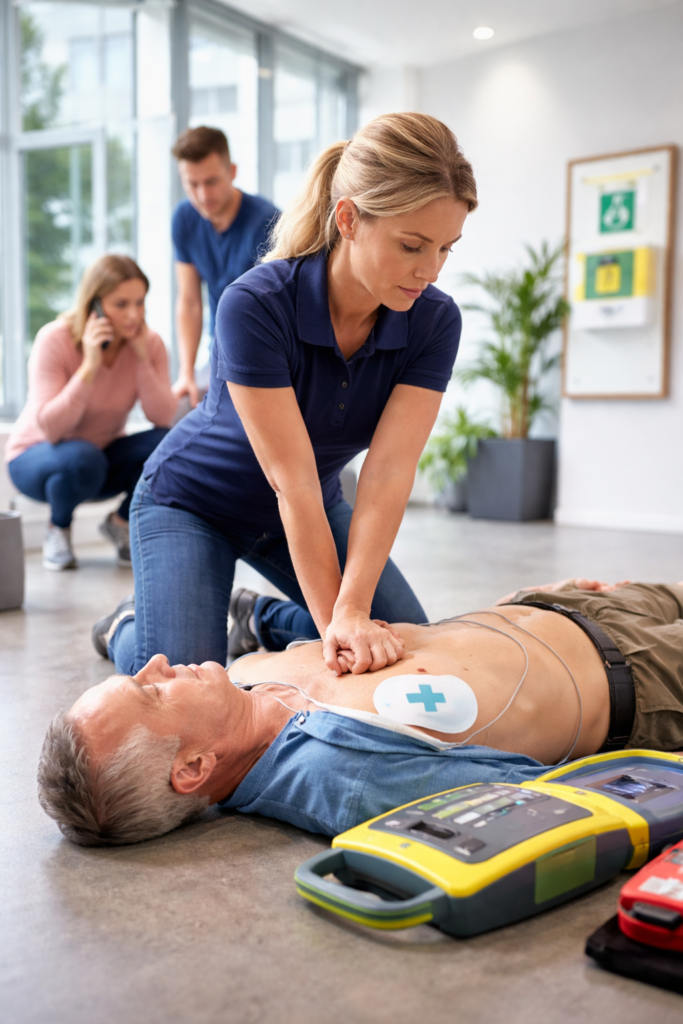
    How to use an AED during CPR in Sydney – step-by-step AED and CPR training demonstration
  • AED access saves lives in Sydney

    AED Access Saves Lives: What Sydney Needs to Know

    When sudden cardiac arrest strikes, every second matters. In a fast-moving city like Sydney, where thousands of people work, commute, study, and socialise daily, AED access saves lives—and often determines whether someone survives long enough for emergency services to arrive.

    Across New South Wales, survival rates from out-of-hospital cardiac arrest remain low. However, studies consistently show that early CPR combined with fast AED access can more than double survival chances. For this reason, AED access in Sydney is no longer a “nice to have”—it is a critical public safety measure.

    At Training NSW, we see firsthand how CPR and AED training empowers ordinary people to take extraordinary action.

    What Is an AED and Why Does AED Access Save Lives?

    An Automated External Defibrillator (AED) is a portable device that analyses heart rhythm and delivers a shock if needed to restore a normal heartbeat.

    Importantly, AEDs are:

    • Designed for public use

    • Safe and easy to operate

    • Guided by clear voice prompts

    Because sudden cardiac arrest can occur without warning, immediate access to a defibrillator is essential. In fact, every minute without defibrillation reduces survival by up to 10%. Therefore, it is clear why AED access saves lives in Sydney, especially in busy or high-risk environments.

    Why AED Access Is Essential Across Sydney

    Sydney’s size, population density, and workplace diversity create unique challenges during medical emergencies. While NSW Ambulance response times are strong, they are not instantaneous. Consequently, bystander CPR and AED use become the first and most important link in the chain of survival.

    High-risk and high-traffic Sydney environments include:

    • Offices and commercial buildings

    • Construction sites and industrial workplaces

    • Childcare centres and schools

    • Gyms, sports clubs, and aquatic centres

    • Shopping centres and transport hubs

    In these locations, defibrillator access in Sydney can save lives before paramedics arrive.

    CPR and AED Training: The Life-Saving Combination

    Although AEDs are designed for public use, outcomes improve dramatically when users are trained. For this reason, CPR and AED training in Sydney is strongly recommended across all industries.

    At Training NSW, our nationally recognised courses teach participants how to:

    • Recognise cardiac arrest quickly

    • Perform high-quality CPR

    • Use an AED with confidence

    • Coordinate emergency responses effectively

    Start with CPR certification: Provide CPR – HLTAID009 in Sydney | Only $50

    This course is ideal for workplaces, fitness professionals, educators, parents, and community members.

    AED Access and Workplace Safety in NSW

    Under NSW Work Health and Safety obligations, employers must manage foreseeable risks. While AEDs are not mandatory in every setting, SafeWork NSW strongly encourages AED availability where risk is elevated.

    To support compliance and safety, Training NSW offers:

    Together, these courses strengthen emergency readiness and reinforce why AED access saves lives in Sydney workplaces.

    AED Access in Childcare and Education Settings

    In childcare and education environments, emergency preparedness is critical. Children, staff, and visitors all benefit when services are trained and equipped to respond immediately.

    The Australian Children’s Education & Care Quality Authority (ACECQA) highlights the importance of:

    • First aid capability

    • Emergency response procedures

    • Risk minimisation strategies

    👉 ACECQA guidance:
    https://www.acecqa.gov.au/

    Training NSW supports educators through:

    As a result, childcare services improve compliance while ensuring AED and CPR readiness across Sydney.

    AEDs in Construction and High-Risk Industries

    Construction and electrical workplaces face higher cardiac risk due to physical strain, heat exposure, and hazardous environments. Therefore, AED access in NSW construction settings is especially important.

    Training NSW delivers:

    Together, these courses ensure workers understand why AED access saves lives in Sydney’s high-risk industries.

    AED Access, Community Safety and Child Protection

    Emergency readiness extends beyond medical response. It also forms part of broader safeguarding responsibilities.

    Training NSW integrates safety education with accredited child protection training:

    When organisations combine safeguarding policies with CPR and AED capability, they create safer, more responsible environments.

    Nationally Recognised Training You Can Trust

    All Training NSW courses are delivered in partnership with:

    Units align with:

    Industry standards and guidance include:

    • ASICA

    • ACECQA

    • Australian Resuscitation Council (ARC)

    As a result, our training meets national compliance requirements while supporting real-world outcomes.

    Where Should AEDs Be Installed in Sydney?

    Best-practice AED placement includes:

    • Reception and entry areas

    • Near lifts and stairwells

    • Sports and fitness facilities

    • Staff rooms and communal areas

    • Construction site offices

    Most importantly, AEDs should be:

    • Clearly signed

    • Easily accessible

    • Supported by trained staff

    This approach reinforces why defibrillator access in Sydney saves lives.

    How Training NSW Helps Save Lives in Sydney

    At Training NSW, we focus on practical, hands-on learning that prepares people for real emergencies. Our Sydney-based training centre offers:

    • Small class sizes

    • Fast certification turnaround

    • Affordable pricing

    • Nationally recognised qualifications

    👉 Popular courses include:

    FAQ

    Because early defibrillation restores heart rhythm quickly, significantly increasing survival before emergency services arrive.


    AEDs are designed for public use; however, CPR and AED training improves confidence and effectiveness.


    Many industries require CPR as part of WHS obligations, particularly childcare, construction, fitness, and healthcare.


    HLTAID009 CPR certification is valid for 12 months.


    Training NSW delivers accredited CPR and First Aid courses in Sydney, opposite Chester Hill Station.

    Final Word: AED Access Saves Lives in Sydney

    Ultimately, AED access saves lives in Sydney when combined with fast action, confident responders, and proper training. Whether you are an employer, educator, or community member, being prepared can mean saving a life.


    Book your CPR or First Aid training with Training NSW today and be ready when every second counts.

    Become A Life-Save Today!

    AED access saves lives in Sydney as trained responders perform CPR and use a defibrillator during a cardiac emergency
  • Best of 2025: Training NSW First Aid Moments & Stories

    Best of 2025: Training NSW’s Top First Aid Moments + Learner Stories

    Celebrating NSW’s Most Inspiring First Aid Highlights, CPR Successes & Real Learner Experiences

    The Best of 2025 Training NSW First Aid Moments truly reflect a remarkable year of growth, inspiration and community impact. Throughout Sydney, Western Sydney, South-West Sydney, Greater NSW, the Illawarra and the Central Coast, thousands of students embraced First Aid, CPR, White Card and Child Protection training. Consequently, 2025 quickly became a defining year for life-saving education across NSW.


    Moreover, an extraordinary collection of learner stories and course highlights revealed just how transformative high-quality First Aid training can be. These Top First Aid Stories NSW 2025 not only celebrate individual achievements but also demonstrate the growing confidence of everyday people empowered to save lives.

    🌟 Why 2025 Became a Standout Year for First Aid & CPR Training in NSW

    The Best of 2025 Training NSW First Aid Moments were shaped by a series of incredible milestones, including:

    Furthermore, Training NSW’s ongoing partnership with ABC First Aid – RTO 3399 ensured all accredited courses remained aligned with training.gov.au requirements and ACECQA standards for the education and care sector. As a result, learners across NSW benefited from nationally recognised, industry-leading training.

    💬 Top Learner Success Stories: Defining the Best of 2025 Training NSW First Aid Moments

    These Training NSW learner experiences highlight the real-life impact of our courses. Additionally, they reveal the professionalism, clarity and genuine care demonstrated by our trainers—particularly Muhammad Siddiqui, who appears in many of the year’s most memorable NSW First Aid highlights 2025.


    ⭐ Eli Vosa — “Informative, Professional & Easy to Understand”

    “Awesome training—very informative and easy to understand. Very professional. Will definitely renew my CPR and First Aid here again. Muhammad was funny, professional, and knowledgeable.”

    Eli’s experience showcases both the clarity and enjoyment that define our Top CPR & First Aid stories NSW 2025.


    ⭐ Fatimah A — “Engaging, Clear & Knowledge-Refreshing”

    “The First Aid and CPR training helped me refresh my knowledge and skills. The trainer was professional, knowledgeable, and made the learning process clear and engaging.”

    Her story illustrates how training remains impactful—even for experienced learners.


    ⭐ Mike Kibet — “Real-Life Examples Made Everything Click”

    “The trainer was knowledgeable and made the class engaging with real-life examples. I now feel confident to handle emergencies.”

    Because of this practical approach, Mike’s story became one of our favourite Training NSW learner highlights.


    ⭐ Lornah Tanui — “Fun, Practical & Confidence-Building”

    “Everything was explained clearly and made fun and practical. I feel more confident if an emergency ever happens.”


    This reflects a recurring theme in our Best of 2025 First Aid moments—hands-on training builds genuine confidence.


    ⭐ Additional Powerful Learner Stories

    Posted on Google Google
    Đăng Khôi Nguyễn profile picture
    Đăng Khôi Nguyễn
    Google star 1Google star 2Google star 3Google star 4Google star 5Trustindex verifies that the original source of the review is Google.
    All good
    Posted on Google Google
    Brenda De Filippis profile picture
    Brenda De Filippis
    Google star 1Google star 2Google star 3Google star 4Google star 5Trustindex verifies that the original source of the review is Google.
    We completed group training on-site and had an excellent experience from start to finish. Muhammad was professional, accommodating, and made the entire process feel effortless. Communication was strong and prompt throughout. I would not hesitate to recommend their services to anyone.
    Posted on Google Google
    Renee Kimani profile picture
    Renee Kimani
    Google star 1Google star 2Google star 3Google star 4Google star 5Trustindex verifies that the original source of the review is Google.
    The lessons were really educative. Mohammad Sadiqui was really helpful through the training. Loved it.
    Posted on Google Google
    Mariam A profile picture
    Mariam A
    Google star 1Google star 2Google star 3Google star 4Google star 5Trustindex verifies that the original source of the review is Google.
    Mohamad siddique is a great instructor. I always do my first aid and CPR here
    Posted on Google Google
    Jacob Jida profile picture
    Jacob Jida
    Google star 1Google star 2Google star 3Google star 4Google star 5Trustindex verifies that the original source of the review is Google.
    Mohammad siddiqua was very understandable and caring, he spoke to us one by one and loved working with us and giving his knowledge of experience, would highly recommend coming and doing your cpr and first aid course hereb
    Posted on Google Google
    Naomi Gituati profile picture
    Naomi Gituati
    Google star 1Google star 2Google star 3Google star 4Google star 5Trustindex verifies that the original source of the review is Google.
    My experience was amazing and educating
    Posted on Google Google
    Ryan Kipchumba profile picture
    Ryan Kipchumba
    Google star 1Google star 2Google star 3Google star 4Google star 5Trustindex verifies that the original source of the review is Google.
    Fantastic educational and very supportive
    Posted on Google Google
    Massey Shirazi profile picture
    Massey Shirazi
    Google star 1Google star 2Google star 3Google star 4Google star 5Trustindex verifies that the original source of the review is Google.
    NSW TRAINING trainer was one of the most energetic and positive person in CPR training

    🏅 2025 Highlights That Defined Training NSW’s Best Year Yet


    1. Strengthening Our NSW Footprint Through Major Training Location Growth

    One of the most exciting Best of 2025 Training NSW First Aid Moments was the remarkable expansion of our training network across Sydney and Greater NSW. This strategic growth significantly improved access to nationally recognised First Aid, CPR, White Card and Child Protection courses. As a result, more individuals across the state gained the opportunity to learn essential life-saving skills close to home.

    Throughout 2025, Training NSW strengthened its presence in key metropolitan and regional hubs, including:

    • Liverpool

    • Blacktown

    • Parramatta

    • Bankstown

    • Campbelltown

    • Penrith

    • Sydney CBD

    • Wollongong (Illawarra region)

    • Central Coast

    Moreover, this expansion allowed us to deliver more Top First Aid Stories NSW 2025, create stronger community engagement, and ensure that workplaces, families and individuals throughout NSW had easier access to accredited training options. Ultimately, this statewide growth became one of the defining features of our NSW First Aid highlights 2025, reinforcing Training NSW as a leading provider of reliable, high-quality emergency care education.

    2. Fast, Reliable Same-Day Certificates Across NSW

    Another standout element of the Best of 2025 Training NSW First Aid Moments was our ability to deliver thousands of same-day certificates. Because of our streamlined systems and partnership with ABC First Aid, learners across NSW received prompt certification—allowing them to start work, renew qualifications or meet compliance requirements immediately.


    3. Exceptional Learner Satisfaction & Consistently High Standards

    Throughout 2025, Training NSW recorded some of the highest review scores in our history. This was driven by:

    • Clear, structured teaching

    • Professional and friendly trainers

    • A welcoming, supportive learning environment

    • Real-world practice scenarios

    • Logical, easy-to-follow course design

    Consequently, Training NSW became one of the most trusted providers for people searching for First Aid training near me, NSW CPR courses, and nationally recognised First Aid education.


    4. Increased Completion of Child Protection Requirements (ACECQA-Aligned)

    Childcare educators across NSW completed:

    • CHCPRT025 Identify and Report Children and Young People at Risk

    • CHCPRT001 Identify and Respond to Children and Young People at Risk

    Learn more via ACECQA

    This achievement became a vital part of our NSW First Aid & Safety highlights 2025, reflecting our commitment to strengthening community safety.

    🙌 Thank You NSW — Here’s to Even Bigger First Aid Moments in 2026

    As we celebrate the Best of 2025 Training NSW First Aid Moments, it’s clear that this year strengthened communities across Sydney and NSW. With thousands of inspiring learner stories, growing training locations, and the continued rise in CPR and First Aid enrolments, 2025 became one of our most impactful years yet.


    We look forward to creating even more Top First Aid Stories NSW 2026.


    FAQ – Best of 2025 Training NSW First Aid Moments 

    A powerful combination of record enrolments, expanded NSW locations, expert trainers and high learner satisfaction.

    Yes — delivered with ABC First Aid (RTO 3399) and listed on training.gov.au.

    Training NSW operates in Parramatta, Liverpool, Bankstown, Blacktown, Campbelltown, Sydney CBD, Penrith, Central Coast, Wollongong and more.

    CPR should be completed every 12 months.

    Yes. They meet the standards outlined by ACECQA.

    Yes — most learners receive their certificate on the same day.

    Your Life-Saving Skills Start Here!

    Best of 2025 Training NSW First Aid Moments graphic featuring a CPR training demonstration and learner testimonial from Eli Vosa, showcasing Top First Aid Stories NSW 2025 and Training NSW learner experiences.
  • Book Staff First Aid Course 2026 Sydney

    Why Now Is the Time to Book Your Staff First Aid Course for 2026 | Training NSW Sydney

    Empower Your Team

    The Lifesaving Benefits of First Aid Training

    In today’s fast-paced workplace, having trained staff can make all the difference in emergency situations. Here’s why investing in First Aid training is essential for your organization:

    Save Lives

    Equip your employees with the skills to respond effectively in emergencies.

    Boosts Confidence

    First Aid training fosters a sense of confidence among employees, leading to a safer work environment.

    Compliance Assurance

    Meet workplace safety regulations and ensure your organization is compliant.

    As workplaces across Sydney grow and adjust to new safety standards, now is the perfect time to book your staff First Aid course for 2026. With compliance tightening across NSW and demand rapidly increasing, Sydney businesses are already planning ahead to secure their preferred training dates.

    Additionally, booking early ensures your organisation remains compliant, prepared and fully equipped to respond to real-world emergencies.


    At Training NSW (TNSW), located in Chester Hill, we deliver nationally recognised First Aid and CPR courses—making it easier for Sydney businesses to confidently book their First Aid training for 2026.

    Why Sydney Businesses Should Book Their Staff First Aid Course for 2026 Now

    1. Demand for Sydney Workplace Safety Training Is Already Rising

    With ongoing regulatory updates from SafeWork NSW and an increased focus on employee wellbeing, the demand for group First Aid training continues to climb. Therefore, by choosing to book your staff First Aid course for 2026 ahead of time, you:

    • Secure ideal training dates

    • Avoid unexpected availability shortages

    • Ensure compliance with national and state safety requirements

    This proactive planning is especially important for childcare, construction and corporate sectors across Sydney.

    2. Avoid the Annual Booking Rush for 2026

    Every year between February and June, First Aid providers experience an overwhelming surge in bookings. Consequently, many Sydney workplaces miss out on their preferred dates or face delays in renewing certifications.

    By locking in your Sydney workplace First Aid course for 2026 now, you benefit from:

    • Priority scheduling

    • Better group pricing

    • More flexibility for onsite First Aid training

    Therefore, early action helps maintain compliance—without the stress.

    3. Stay Compliant With National Training Standards

    To remain compliant, all organisations must follow national guidelines published on:

    • training.gov.au

    • SafeWork NSW industry requirements

    • ACECQA (for early childhood centres)

    • ASICA safety resources

    Furthermore, CPR must be renewed every 12 months, and HLTAID011 Provide First Aid must be renewed every 3 years. This makes it essential to book your 2026 First Aid training in Sydney well in advance.

    Which Courses Should Your Staff Book for 2026?

    ✔ Provide First Aid – HLTAID011

    The core workplace requirement for most industries across Sydney.
    Includes CPR, wound management, fractures, burns, medical conditions and emergency responses.

    ✔ Provide CPR – HLTAID009

    Needed every year, and therefore perfect for annual staff refreshers.

    ✔ White Card – CPCWHS1001

    Essential for all construction and trade workers who must enter a worksite.

    ✔ Child Protection Training – CHCPRT025 / CHCPRT001

    Mandatory for early childhood centres under ACECQA requirements.

    Why Choose Training NSW When You Book Your Staff First Aid Course for 2026 in Sydney?

    1. Accredited Training Through ABC First Aid (RTO 3399)


    Training NSW delivers nationally recognised training through ABC First Aid (RTO 3399)—a reputable and trusted Australian RTO.

    2. Onsite Training Across All Sydney Suburbs

    We travel to your workplace to deliver customised First Aid, CPR and safety training.
    This is ideal for:


    • Corporate offices

    • Childcare centres

    • Schools and OOSH services

    • Construction and trade companies

    • Warehouses and factories

    3. Fast Certification—Delivered Within 1 Business Day


    Your staff receive their nationally recognised certificate quickly and seamlessly.

    4. Flexible Group Pricing for 2026 Bookings

    Early group bookings for 2026 allow you to lock in favourable pricing before future annual increases.

    Sydney Workplaces That Must Prioritise First Aid Bookings for 2026

    Childcare & Early Learning Centres

    Due to ACECQA requirements, educators must hold First Aid, CPR, Asthma and Anaphylaxis training. Early bookings avoid compliance pressure.

    Construction & Trade Businesses

    Combine First Aid + CPR + White Card to upskill your team efficiently.

    Corporate Offices

    First Aid officers must maintain valid certificates every year—early scheduling avoids internal workflow disruptions.

    Hospitality, Retail & Customer Service Sectors


    High-footfall environments demand well-trained staff who can manage sudden emergencies.

    Learn First Aid Today

    Why You Should Book Early

    Guaranteed Spots

    Booking early ensures you secure a spot in our course, so you won’t have to worry about cancellations or closed classes.

    Potential Discounts

    Early bookings often qualify for discounts, making your first aid training more budget-friendly.

    Easier Planning

    By booking ahead, you can plan your schedule better and prepare for the course without rushing.

    First Aid Course Details

    Learn how to book your staff first aid course easily with Training NSW.

    Onsite Training

    Book onsite training for your team at your preferred location for convenience.

    Classroom Courses

    Enroll in classroom sessions to engage with instructors and peers for hands-on learning.

    Participant Confirmation

    Receive confirmation for your participants after booking to keep everything organized.

    Pre-Learning Access

    Get access to pre-learning materials to prepare your team ahead of time.


    FAQ – Staff First Aid Course 2026 (Sydney)

    When should Sydney businesses renew First Aid certificates?

    Provide First Aid must be renewed every 3 years, and CPR must be renewed annually.

    Absolutely. We service all Sydney suburbs and deliver high-quality onsite training for groups.

    It includes online pre-learning plus 4–6 hours of practical face-to-face training.

    Ready to Book Your Staff First Aid Course for 2026 in Sydney?

    Secure your dates now and get ahead of compliance requirements—before the rush begins.


    Training NSW is here to support your staff with accredited, high-quality First Aid, CPR and workplace safety training throughout 2026.

    Staff completing CPR training during a workplace First Aid session in Sydney, ideal for businesses looking to book staff First Aid course 2026.
  • Summer first aid checklist for Aussie holidaymakers

    🌞 Summer Prep: First Aid Checklist for Aussie Holidaymakers (Sydney Edition)

    Preparing for the warmer months is essential, especially when you’re planning beach trips, barbecues, road adventures, or long-awaited holidays around Sydney. This summer first aid checklist for Aussie holidaymakers ensures you stay safe, confident and ready for every sunny moment. Because Australian summers bring extreme UV, heatwaves, marine stingers, and bush hazards, having the right gear — and the right skills — can make all the difference.

    Before you head out, consider refreshing your First Aid skills:
    👉 Provide First Aid HLTAID011 in Sydney
    👉 Provide CPR HLTAID009


    These courses help ensure you’re fully prepared for emergencies this summer.

    Why Every Traveller Needs a Summer First Aid Checklist in Australia

    Australia’s climate is unpredictable, and holiday accidents can happen quickly. Therefore, having a summer safety checklist Australia travellers rely on is vital. Whether you’re swimming at Coogee, hiking in the Blue Mountains, or enjoying a coastal drive, you need a practical checklist tailored for Aussie conditions.


    Training NSW’s courses are nationally recognised through ABC First Aid – RTO 3399, giving you the confidence that your skills are compliant and up to date.

    ✔️ Essential Summer First Aid Checklist for Aussie Holidaymakers


    Below is the definitive holiday first aid tips Australia travellers should know and pack.

    1. Sun Safety Essentials for Summer Travellers

    Australia’s UV index is among the highest globally, so sun safety should always be your first priority.

    Pack:

    • SPF 50+ broad-spectrum sunscreen

    • SPF lip balm

    • Zinc stick

    • UV-rated sunglasses

    • Aloe vera gel for sunburn

    • Wide-brim hat


    These items are fundamental additions to any summer travel first aid kit, especially for Sydney beachgoers.

    2. Heat Management & Hydration Tools

    Because summer temperatures can rise rapidly, heat exhaustion and heatstroke are common. Therefore, your holiday first aid planning must include hydration tools.

    Include:

    • Electrolyte powders

    • Oral rehydration salts

    • Cooling towels

    • Insulated stainless-steel bottles

    Heat emergencies often require CPR, so completing your CPR course in Sydney (HLTAID009) is strongly recommended.

    3. Marine Stings & Beach Injury Essentials

    Sydney’s beaches are stunning, but they also expose you to hazards like bluebottles, jellyfish, and sharp reef surfaces. Your summer first aid checklist for Aussie holidaymakers must include items specifically for marine environments.

    Pack:

    • Vinegar for jellyfish stings

    • Hot water-safe bowl (for bluebottle treatment)

    • Waterproof bandages

    • Tweezers for sea urchins

    • Antiseptic spray

    For more guidance, always refer to Surf Life Saving standards

    4. Bushwalking First Aid Gear (Snake Bites & Insect Risks)

    Many Australians love bushwalking during summer, however, snake activity peaks during these months. That’s why bush essentials should be part of your summer travel first aid kit.

    Include:

    • Compression bandages for snake bites

    • Emergency blanket

    • Insect repellent

    • Torch or headlamp

    • Whistle

    • Cold packs

    Learning the pressure immobilisation technique is included in your HLTAID011 First Aid course.

    5. General Wound Care Supplies

    No summer trip is complete without basic wound care items. Because cuts, scrapes and blisters happen often, always pack:

    • Gauze swabs

    • Adhesive strips

    • Saline tubes

    • Scissors

    • Medical tape

    • Latex-free gloves


    These items form the backbone of your summer safety checklist Australia travellers use across beaches, campsites and picnic areas.

    6. Medications & Personal Essentials

    Don’t overlook your medications. Sudden allergic reactions or holiday illnesses can derail your trip instantly.

    Pack:

    • Antihistamines

    • Pain relief medication

    • Asthma puffers

    • EpiPen if required

    • Motion sickness tablets


    This section aligns perfectly with the goal of the summer first aid checklist for Aussie holidaymakers: being prepared for unexpected health issues.

    7. Emergency Contacts & Safety Documents

    In addition to physical items, always bring your important documents.

    Carry:

    • Medicare card

    • Emergency contacts

    • Children’s safety documentation

    • Travel insurance details

    Complete your Child Protection Accredited Training

    ⭐ Bonus Tip: Upgrade Your First Aid Skills Before Summer Begins

    While packing the right gear is essential, skills save lives. Before heading out on holiday, consider completing these nationally recognised courses:

    👉 Provide First Aid HLTAID011

    👉 CPR HLTAID009

    👉 White Card Course CPCWHS1001 (For summer jobseekers)

    Training NSW delivers all courses in partnership with ABC First Aid – RTO 3399.


    These qualifications are nationally recognised through training.gov.au and align with ACECQA standards.

    ❓ FAQs: Summer First Aid Checklist for Aussie Holidaymakers

    What should be in a summer travel first aid kit?

    It should include sun protection, electrolytes, marine sting treatment, compression bandages, antiseptic supplies, and essential medications.

    Absolutely. Completing HLTAID011 Provide First Aid and HLTAID009 CPR prepares you for emergencies ranging from heatstroke to stings and snake bites.

    Yes—Training NSW courses are nationally recognised and listed on training.gov.au.

    Every 12 months, according to Australian guidelines.

    Vinegar, waterproof bandages, tweezers, antiseptic spray and a hot-water-safe container.

    Final Word: Stay Safe & Summer-Ready in Sydney

    Staying safe during the holidays starts with preparation. This summer first aid checklist for Aussie holidaymakers gives you the confidence to enjoy every moment — whether you’re swimming, travelling, hiking or celebrating with family.


    To stay even more prepared, enrol in a First Aid or CPR course in Sydney today:

    Summer first aid checklist for Aussie holidaymakers featuring a beach hat, sunglasses, first aid kit, sunscreen, water bottle and essential travel safety items.
  • What you learn in advanced first aid hltaid014

    What You Learn in Advanced First Aid (HLTAID014): Full Course Breakdown

    Below is a detailed overview of what you learn in Advanced First Aid (HLTAID014), including advanced first aid techniques, HLTAID014 learning outcomes, and real-life workplace applications.

    1. Scene Assessment & Hazard Control (HLTAID014 Learning Outcome)

    One of the first things you learn in the HLTAID014 course is advanced scene awareness. Consequently, you will be trained to:

    • Identify hazards in high-risk situations

    • Control risks such as electricity, fire, gas, and machinery

    • Communicate effectively with bystanders

    • Use triage principles to prioritise treatment

    • Coordinate emergency responses confidently

    Additionally, this applies strongly to environments where workers also complete the White Card Course (CPCWHS1001)

    2. Advanced Airway Management (What You Learn in Advanced First Aid)

    Another vital part of what you learn in Advanced First Aid HLTAID014 is airway management at an advanced level. You will practice:

    • Airway suctioning

    • Oropharyngeal airway (OPA) insertion

    • Managing partial and full obstructions

    • Safe airway positioning for unconscious casualties


    Because airway issues can escalate within seconds, these skills are essential for supervisors, educators, and first responders.

    3. Managing Severe Trauma & Complex Injuries

    A significant section of the HLTAID014 course content focuses on high-risk trauma management. This includes:

    • Severe bleeding management (including tourniquets & haemostatic dressings)

    • Handling fractures, crush injuries & impalements

    • Treating spinal injuries

    • Managing chest & abdominal trauma

    • Electrical, chemical, and thermal burns

    • Amputation emergencies

    • Eye injuries and embedded objects


    These advanced treatment techniques go far beyond the standard first aid level.

    4. Responding to Major Medical Emergencies

    In addition to trauma care, what you learn in Advanced First Aid includes the management of serious medical conditions, including:

    • Stroke (FAST assessment)

    • Diabetic emergencies

    • Severe allergic reactions & anaphylaxis

    • Serious asthma attacks

    • Seizures & epilepsy

    • Shock

    • Poisoning & toxic exposure

    • Heatstroke & hypothermia


    Furthermore, you learn how to recognise early warning signs before conditions deteriorate.

    5. Advanced Resuscitation Support

    Although HLTAID015 is a separate advanced resuscitation unit, you still learn several advanced resuscitation support skills in HLTAID014. You will practise:

    • Coordinating multiple first aiders during CPR

    • Using AEDs in complex environments

    • Managing prolonged CPR scenarios

    • Supporting casualties during respiratory distress


    This knowledge reinforces everything learned in your CPR course.

    6. Psychological First Aid & Communication

    An important part of what you learn in Advanced First Aid (HLTAID014) is providing emotional support.
    You will learn to:

    • Apply psychological first aid

    • Manage panic and distress

    • Communicate with victims of violence, abuse or trauma

    • Provide compassionate and culturally safe care
      This is extremely useful for educators and carers who also complete our Child Protection Accredited Course


    7. Triage & Multiple-Casualty Incidents

    Another major outcome of what you learn in Advanced First Aid HLTAID014 is triage training for incidents with multiple patients.
    You will learn to:

    • Use START triage principles

    • Sort casualties using colour-coded tags

    • Allocate roles to bystanders and team members

    • Manage chaotic or crowded scenes confidently


    This is one of the most crucial skills for workplace emergencies.

    8. Compliance, Reporting & Legal Responsibilities

    Furthermore, the HLTAID014 course ensures you understand:

    • Duty of care

    • WHS responsibilities

    • Consent and legal considerations

    • Infection control

    • Completing incident forms correctly

    Training NSW ensures full compliance with:


    Course Format at Training NSW – Chester Hill

    Location:

    2/5 Chester Hill Road, Chester Hill NSW 2162
    (Directly opposite Chester Hill Train Station)

    Duration:

    6 hours face-to-face

    Online theory component before class

    Certification:

    Digital certificate issued within 1 business day

    Valid for 3 years (CPR renewed annually)

    Who Should Complete the HLTAID014 Course in Sydney?

    After understanding what you learn in Advanced First Aid HLTAID014, you’ll see why it is ideal for:


    • Supervisors & team leaders

    • Construction workers & tradies

    • Security personnel

    • Childcare educators

    • Hospitality staff

    • Aged care & disability workers

    • Sports coaches

    • Community volunteers

    • Anyone wanting advanced first aid skills

    Frequently Asked Questions (FAQs) for Advanced First Aid 

    What’s included in the Advanced First Aid HLTAID014 course?

    It includes CPR, first aid, emergency life support, airway management, trauma care, medical emergencies, psychological support, triage and legal responsibilities.

    Yes. The qualification is nationally recognised through training.gov.au and delivered in partnership with ABC First Aid (RTO 3399).

    3 years. CPR must be refreshed every 12 months.

    No. All required units (CPR, BELS, First Aid) are included.

    Yes, especially because it covers psychological first aid and high-risk scenarios. ACECQA acknowledges approved first aid qualifications for childcare.

    HLTAID014 includes significantly more advanced skills, trauma management, triage, and coordination for complex situations.

    Ready to Book Advanced First Aid (HLTAID014) in Sydney?

    If you want to gain professional-level emergency skills and become the key first aider in your workplace, this course is for you.


    🔥 Book your HLTAID014 training with Training NSW today!
    📍 Chester Hill
    ✔ Nationally Recognised
    ✔ Certificate in 1 Business Day
    ✔ Delivered with ABC First Aid (RTO 3399)

    Instructor demonstrating CPR during Advanced First Aid HLTAID014 training in Sydney, showing practical skills covered in what you learn in an advanced first aid course.
  • How to Make Your Workplace CPR-Ready in Sydney: AEDs, CPR Training & Emergency Drills

    How to Make Your Workplace CPR-Ready in Sydney: AEDs, CPR Training & Emergency Drills

    Achieving strong workplace CPR readiness in Sydney is essential for every business, regardless of size or industry. Because cardiac emergencies occur without warning, being properly prepared with AEDs, accredited CPR training, and structured emergency drills can dramatically increase survival outcomes. Moreover, a CPR-ready workplace not only improves safety but also fulfils NSW compliance expectations and boosts overall employee confidence.

    In this comprehensive Sydney-focused guide, you’ll learn how to build a CPR-ready workplace, including AED installation, accredited CPR courses, WHS compliance, and effective response planning.

    Why Workplace CPR Readiness in Sydney Matters

    Sydney workplaces—from Parramatta to Bankstown, Liverpool, Campbelltown, and the CBD—experience thousands of medical emergencies every year. Because sudden cardiac arrest requires immediate action, improving your Sydney workplace CPR readiness is crucial.

    When a business becomes CPR-ready:

    • Survival rates can increase by more than 70%

    • Staff respond faster and more confidently

    • WHS obligations are met

    • Parents, visitors, and customers feel safer

    • High-risk industries reduce liability


    Additionally, cardiac emergencies often escalate quickly, so having trained responders on-site significantly reduces the severity of incidents.

    1. Provide Accredited CPR Training (HLTAID009) to Employees

    The first major step toward achieving workplace CPR readiness in Sydney is ensuring your staff receive accredited CPR and First Aid training. According to SafeWork NSW, workplaces must have an appropriate number of trained first aiders based on risk level.

    Recommended courses for Sydney workplaces

    ✔ HLTAID009 – Provide CPR

    Accredited CPR course to refresh every 12 months.

    ✔ HLTAID011 – Provide First Aid

    Full first aid qualification required every 3 years.

    ✔CHCPRT025 – Child Protection (Accredited)


    Mandatory for childcare educators and OOSH staff.

    ✔CPCWHS1001 – White Card Course

    Required for construction workers before entering a job site.

    All Training NSW courses are delivered in partnership with ABC First Aid – RTO #3399, full ASQA compliance, and alignment with national standards listed on training.gov.au as well as ACECQA-approved requirements shown on acecqa.gov.au.

    Why CPR training is vital

    Because emergencies escalate rapidly, employees with CPR skills can:

    • Recognise cardiac arrest early

    • Perform high-quality compressions

    • Use an AED safely

    • Maintain confidence during an emergency event

    CPR is the most critical component of any CPR-ready workplace.

    2. Install and Maintain an AED (Defibrillator) On-Site

    A central part of AED workplace safety in NSW is ensuring your defibrillator is always accessible and operational. AEDs dramatically improve survival rates when used within the first few minutes of collapse.

    Sydney workplaces should place AEDs:

    • In a visible, central location

    • Within 3 minutes’ access from any point

    • Free from obstructions

    • With large, clear signage

    • Near high-risk areas such as gyms, factories, construction zones, or childcare rooms

    AED Maintenance Checklist

    To maintain strong CPR preparedness in workplaces, check:

    • Electrode pad expiry dates

    • Battery status

    • Staff awareness of location

    • Accessibility during opening hours

    • Monthly visual inspections

    Many Sydney organisations also incorporate AED demonstrations during their CPR training sessions for better familiarity.

    3. Run Regular CPR & Emergency Response Drills

    Even after receiving accredited training, staff may hesitate during real emergencies unless they’ve practiced scenarios repeatedly. Therefore, running consistent drills significantly strengthens Sydney workplace CPR readiness.

    Your drills should include:

    • Recognising an unconscious casualty

    • Calling 000 and reporting the emergency

    • Retrieving and operating the AED

    • Performing CPR

    • Communicating effectively with team members

    • Managing bystanders

    • Completing an incident report

    Recommended drill frequency

    • Every 6 months for standard workplaces

    • Every 3 months for childcare, gyms, schools, and construction

    • Monthly in high-risk environments


    By conducting structured drills, your business consistently improves CPR readiness and emergency performance.

    4. Create a Written Emergency Response Plan

    To fully establish CPR emergency readiness, every Sydney workplace should maintain a documented emergency plan that outlines:

    • AED location

    • Names of trained first aiders

    • Communication procedures

    • Evacuation paths

    • Emergency contact list

    • WHS responsibilities

    • Post-incident reporting

    This plan should be reviewed at least once per year and given to all new staff as part of induction.

    5. Ensure NSW & National Compliance

    Sydney workplaces must follow several national and state guidelines when building a CPR-ready workplace.

    Important compliance bodies include:

    ✔ Training.gov.au
    National training standards for HLTAID units

    ✔ ACECQA

    Required training for childcare and education services

    ✔ ABC First Aid (RTO #3399)

    Our nationally recognised training partner


    By following these guidelines, workplaces strengthen safety culture, reduce legal risk, and ensure that staff receive training that meets national expectations.

    Conclusion: Building a CPR-Ready Workplace in Sydney

    Ultimately, building a truly CPR-ready workplace in Sydney requires a combination of accredited training, accessible AEDs, regular emergency drills, and a clear emergency response plan. With the right preparation, your team will respond confidently and effectively whenever a cardiac emergency occurs.


    Training NSW provides accredited CPR and First Aid training across all Sydney regions, delivered by qualified trainers in partnership with ABC First Aid – RTO #3399.

    FAQs – Workplace CPR Readiness Sydney

    Most workplaces need staff trained in HLTAID009 Provide CPR, refreshed every 12 months.

    Most workplaces require at least one AED accessible within three minutes from all major work areas.

    Yes, Sydney childcare centres must complete ACECQA-approved First Aid, CPR, anaphylaxis, and emergency management units.

    At least every 6 months, but high-risk sectors should conduct drills more frequently.

    AED maintenance is minimal—mostly pad and battery replacements every few years.

    Team receiving CPR and AED training in a Sydney workplace as part of improving workplace CPR readiness and safety.
  • Online & Face-to-Face First Aid Training Sydney

    Online + Face-to-Face First Aid Training in Sydney: The Best of Both Worlds

    Why blended First Aid training is now the top choice across Greater Sydney.

    If you’re searching for a First Aid course in Sydney that is flexible, fast and fully accredited, then Online + Face-to-Face First Aid training—also known as blended First Aid training—is easily the best solution. It truly offers the best of both worlds, because you complete your theory online and then attend a short in-person practical session. As a result, students get flexibility without sacrificing hands-on skills.

    TrainingNSW proudly delivers this hybrid learning model for key accredited units including:

    • HLTAID011 – Provide First Aid

    • HLTAID009 – Provide CPR

    • CPCWHS1001 – White Card Course

    • CHCPRT025/CHCPRT001 – Accredited Child Protection Course

    All certificates are issued through our partner RTO, ABC First Aid (RTO 3399) (https://abcfirstaid.com.au/), ensuring national recognition. Furthermore, all qualifications meet national requirements through training.gov.au and early childhood industry standards through ACECQA (https://www.acecqa.gov.au/).

    What Is Online + Face-to-Face First Aid Training?

    Blended First Aid training in Sydney uses a dual-delivery model combining online learning with hands-on, face-to-face training. This means you complete all the theoretical knowledge online first and then demonstrate practical skills in person with a qualified instructor.

    This mixed-mode approach is becoming increasingly popular because it reduces class time, enhances flexibility, and maintains full accreditation.

    The hybrid model includes:

    1. Online Theory (Self-Paced)

    Learn essential First Aid principles at your convenience. You’ll cover:
    ✔ Emergency response steps
    ✔ Legal responsibilities
    ✔ CPR theory
    ✔ First Aid management
    ✔ Scenario-based learning

    You can study on your laptop, tablet or phone—meaning you can learn anywhere in Sydney, from Parramatta to Bankstown, or even on the train.

    2. Face-to-Face Practical Class

    After completing the online portion, you join a short in-person class at our Chester Hill centre. Here, you practise CPR, recovery position, AED use and more.
    This ensures that while learning is flexible, skills are still hands-on.

    Why Sydney Students Prefer the Best of Both Worlds First Aid Delivery

    More and more students across Sydney are choosing online and in-person First Aid training because it saves time and supports different learning styles. Let’s explore why this approach has become the top choice.

    1. Faster Course Completion

    With blended First Aid training in Sydney, you significantly reduce the time spent in a traditional classroom. Because the theory is completed online, the face-to-face component is short and highly efficient. Consequently, this is ideal for workers in busy suburbs like Parramatta, Liverpool, Bankstown, Auburn, and the Sydney CBD.

    2. Learn Anytime, Anywhere

    Another major benefit of this hybrid First Aid course model is the ability to study anytime. Whether you’re at work, at home with the kids, commuting, or taking a break, you control your learning pace.

    Furthermore, online First Aid training in Sydney is perfect for people with unpredictable schedules, including childcare educators, tradies, healthcare staff, and shift workers.

    3. Still 100% Accredited and Recognised

    Although the theory is online, the course remains fully accredited through our partner RTO, ABC First Aid (RTO 3399). Your certificate is valid nationwide and complies with the Australian Qualifications Framework (AQF). Additionally, industries across NSW—including construction, childcare, education, aged care and security—fully accept blended First Aid certificates.

    For verification, you can refer to the official course requirements on training.gov.au (https://training.gov.au/).

    4. More Practical Time, Less Classroom Theory

    Because you complete theory beforehand, your practical class focuses entirely on skill development. Therefore, you spend more time performing CPR, using manikins, practising bandaging and running through mock emergencies.

    Moreover, this improves confidence and helps learners retain skills for real-life situations.

    5. More Sydney Class Times and Availability

    TrainingNSW runs classes 7 days a week, including evenings and weekends. Consequently, you have maximum flexibility when choosing your practical session.

    Blended First Aid Courses Available at TrainingNSW

    HLTAID011 – Provide First Aid (Blended Delivery)

    This is our most popular online + face-to-face First Aid training option. Complete your online theory first, then attend a short practical class.
    🔗 https://trainingnsw.org/provide-first-aid-hltaid011/


    HLTAID009 – Provide CPR (Hybrid Learning)

    A fast, efficient CPR training option combining online theory and a short in-person assessment.
    🔗 https://trainingnsw.org/cpr-hltaid009/


    Accredited Child Protection Course (CHCPRT025 / CHCPRT001)

    Includes online learning and trainer-supported assessments.
    Approved for ACECQA-regulated childcare roles.
    🔗 https://trainingnsw.org/trainingnsw-child-protection-course-chcprt025-chcprt001/


    CPCWHS1001 – White Card Course (Preparation + Face-to-Face Assessment)

    While NSW requires in-person assessment, online study resources help students prepare more effectively.
    🔗 https://trainingnsw.org/white-card-course-cpcwhs1001/

    Who Benefits Most from Hybrid First Aid Training in Sydney?

    This flexible First Aid course model is ideal for:

    • Busy professionals

    • Childcare educators

    • Parents

    • University & TAFE students

    • Healthcare workers

    • Construction and trade workers

    • Corporate teams

    • Job seekers needing fast certification

    Whether you live in Chester Hill, Bankstown, Parramatta, Lidcombe, Fairfield, Cabramatta, Auburn, Campsie, or Burwood, the dual-delivery First Aid approach is the most convenient option.

    How the Online + Face-to-Face First Aid Training Process Works

    To help you understand how smoothly this model runs, here is the exact process:

    Step 1 — Enrol Online

    Select your training date and secure your spot.

    Step 2 — Start Your Online Learning

    Access is instant. Additionally, you can complete it in multiple sessions.

    Step 3 — Attend Your In-Person Practical Class

    Held at our Chester Hill centre—just a 2-minute walk from the train station.

    Step 4 — Receive Your Certificate Fast

    Your nationally recognised certificate is issued by ABC First Aid (RTO 3399) within 1 business day.

    Why Choose TrainingNSW for Blended First Aid Training in Sydney?

    TrainingNSW is one of Sydney’s fastest-growing First Aid training providers because:

    ✔ We offer nationally accredited blended First Aid courses
    ✔ Our location is extremely accessible (Chester Hill, 2162)
    ✔ Trainers are experienced, friendly and supportive
    ✔ We provide small class sizes
    ✔ You get fast certificates
    ✔ We offer free rescheduling
    ✔ Our pricing is affordable
    ✔ We deliver Sydney-first learning convenience

    Furthermore, our training is aligned with ASICA safety standards, ACECQA requirements, and national VET compliance frameworks.

    Frequently Asked Questions (FAQ)

    Yes. This blended First Aid training model is fully accredited, recognised nationally and accepted by all employers.

    Generally, students complete it in 1–2 hours, depending on experience. 

    However, it is important to note that the online modules are purely self-paced!


    Absolutely. Our First Aid and Child Protection units are accepted across all ACECQA-approved centres.

    You receive your certificate within 1 business day after completing your face-to-face practical.


    At TrainingNSW – 2/5 Chester Hill Road, Chester Hill NSW 2162.

    Yes. HLTAID009 CPR is included in HLTAID011 First Aid.

    Yes. We deliver onsite sessions for workplaces requiring group training.

    Start Your Blended First Aid Training Today

    Experience the best of both worlds with flexible online learning and hands-on practical training at TrainingNSW. If you want fast, accredited and convenient First Aid training in Sydney, blended delivery is the smartest option.

    A trainer supervising a student performing CPR on a manikin during a practical class, representing online and face-to-face First Aid training in Sydney.
  • CPR Myths Debunked | CPR Training in NSW – Training NSW

    CPR Myths Debunked: What Every Australian Should Know

    Updated by Training NSW – Your CPR Training Experts in Sydney

    Understanding CPR correctly can literally save a life. However, countless CPR misconceptions continue to circulate throughout NSW communities. Consequently, many people hesitate in emergencies because they’re unsure what is true and what is not. That’s why this article, CPR Myths Debunked: Facts You Should Know, breaks down every common misunderstanding using accurate, evidence-based CPR training facts aligned with Australian standards.


    If you live or work in Sydney, having the right CPR Training in NSW is critical—not only to meet workplace requirements but also to build real confidence in emergency response situations.

    Myth 1: “CPR Restarts the Heart”

    ❌ Myth

    Many people believe CPR restarts a stopped heart.

    ✅ Fact You Should Know

    CPR does not restart the heart. Instead, CPR maintains oxygenated blood flow to the brain and vital organs until a defibrillator delivers a shock, which is the only thing capable of restoring a normal heartbeat.

    Therefore, while CPR alone won’t bring someone “back to life,” it significantly increases the chances of survival until professional help arrives.


    👉 Learn proper CPR techniques through accredited CPR Training in NSW (HLTAID009):
    https://trainingnsw.org/cpr-hltaid009/

    Myth 2: “You Can Get Sued for Doing CPR Wrong”

    ❌ Myth

    Fear of legal consequences stops many NSW bystanders from helping.

    ✅ Fact You Should Know

    Australian Good Samaritan laws protect anyone who attempts CPR in good faith. Furthermore, as long as you are genuinely trying to help, you cannot be held legally responsible.


    Training NSW delivers CPR training in partnership with ABC First Aid (RTO 3399), ensuring all learners understand their legal protections.
    👉 https://abcfirstaid.com.au/

    Myth 3: “Only Qualified People Should Perform CPR”

    ❌ Myth

    Some assume CPR must be left to trained medical professionals.

    ✅ Fact You Should Know

    Any attempt at CPR is far better than doing nothing. Moreover, even untrained bystanders performing “hands-only CPR” can dramatically improve survival outcomes.

    Nevertheless, completing proper HLTAID011 Provide First Aid, which includes CPR, ensures you perform every step safely and confidently.


    👉 Book your course here:
    https://trainingnsw.org/provide-first-aid-hltaid011/

     Myth 4: “You Will Hurt Someone If You Do CPR”

    ❌ Myth

    People often fear causing injuries like broken ribs.

    ✅ Fact You Should Know

    It is true that rib fractures can occur; however, this is not a reason to stop. In fact, broken ribs are common and acceptable during CPR, because keeping the brain supplied with oxygen is far more important.

    ASCIA guidelines support continuing CPR even if you hear or feel ribs crack:
    👉 https://www.allergy.org.au/


    As a result, correct CPR compressions remain the priority.

    Myth 5: “Mouth-to-Mouth Is Always Required”

    ❌ Myth

    Many still believe rescue breaths are mandatory for every situation.

    ✅ Fact You Should Know

    For trained responders, yes—30 compressions : 2 breaths is ideal.
    However, hands-only CPR is strongly recommended when:

    • You are untrained

    • Rescue breaths are unsafe

    • Infection risks are present

    • You are uncomfortable giving breaths

    Training.gov.au confirms these guidelines under the HLTAID009 Provide CPR competency:
    👉 https://training.gov.au/Training/Details/HLTAID009


    Furthermore, hands-only CPR is proven to be extremely effective for adult cardiac arrest.

    Myth 6: “Children Need the Same CPR as Adults”

    ❌ Myth

    Many assume CPR technique is identical regardless of age.

    ✅ Fact You Should Know

    Children and infants require modified CPR:

    • Depth: 1/3 of chest

    • Infants: use two fingers

    • Breaths are essential


    Consequently, anyone working with children—especially in childcare, sports, or education—should complete HLTAID012 Childcare First Aid.

    Myth 7: “A White Card Includes CPR Training”

    ❌ Myth

    Some construction workers mistakenly think CPCWHS1001 White Card covers First Aid or CPR.

    ✅ Fact You Should Know

    A White Card does NOT include CPR or First Aid.
    Construction workers still require at minimum:

    ✔ HLTAID009 Provide CPR
    ✔ HLTAID011 Provide First Aid


    Learn more:
    White Card → https://trainingnsw.org/white-card-course-cpcwhs1001/
    CPR Course → https://trainingnsw.org/cpr-hltaid009/

    Why CPR Training in NSW Matters More Than Ever

    Cardiac arrests remain a leading emergency in Australia. Consequently, quick action—especially in the first 3 minutes—dramatically increases survival rates.

    With Training NSW, you receive:

    • Nationally recognised CPR certification

    • Fast 1-day processing

    • Training aligned with ABC First Aid (RTO 3399)

    • Chester Hill training centre location

    • NSW-focused course delivery


    Ultimately, the right CPR training saves lives.

    Frequently Asked Questions (FAQ)

    CPR must be renewed every 12 months, as recommended by training.gov.au.

    Most practical sessions take  45-60 mins, plus online pre-learning.

    Yes. CPR expires in 1 year while First Aid (HLTAID011) expires every 3 years.

    Absolutely. If a person is unresponsive and not breathing normally, CPR is always recommended.

    Training NSW delivers accredited CPR courses in Sydney:
    👉 https://trainingnsw.org/cpr-hltaid009/

    Final Word: CPR Myths Debunked – Now You Know the Facts

    By understanding the facts you should know and dismissing dangerous CPR myths, you can confidently step in during emergencies. Whether you’re a parent, worker, coach, or member of the public, your willingness to learn can truly change lives.


    👉 Book your CPR Training in NSW now:
    https://trainingnsw.org/cpr-hltaid009/

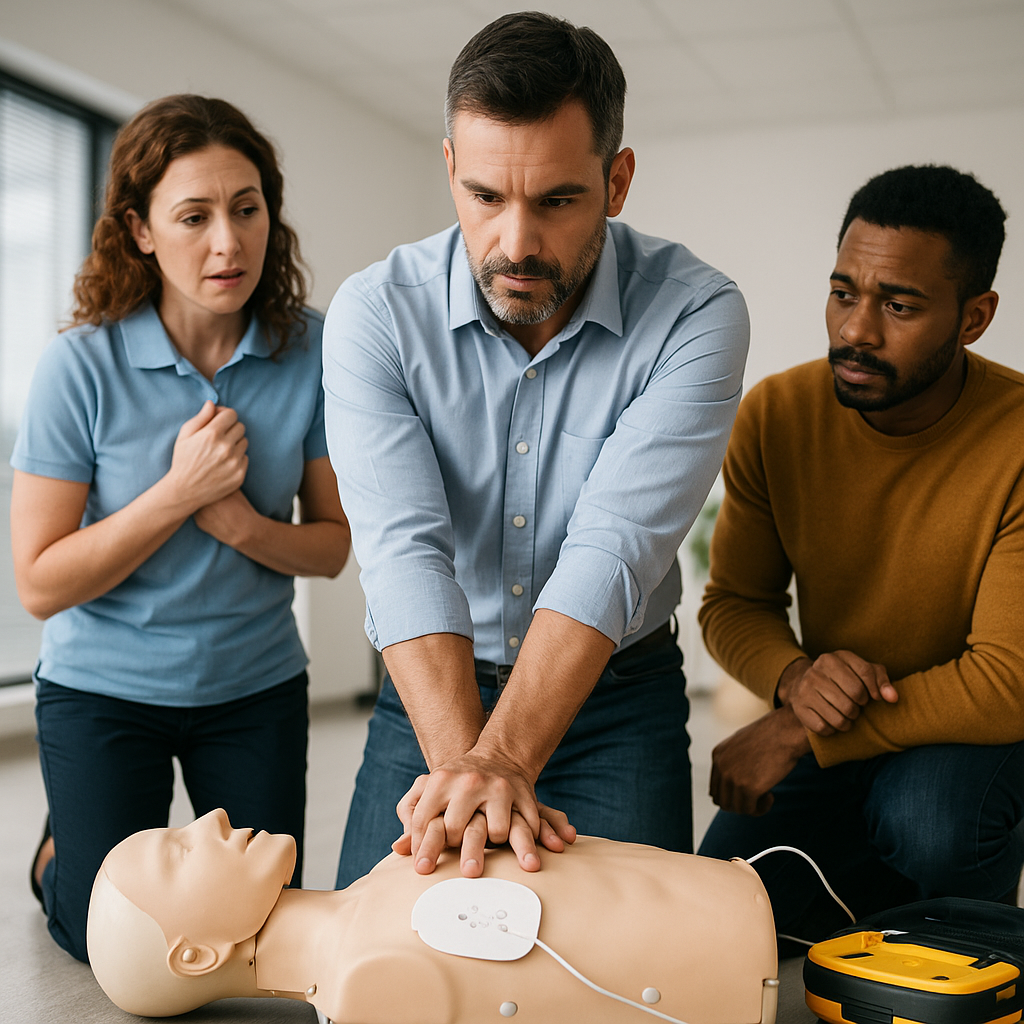
    Paramedic performing CPR on a training manikin with AED nearby, illustrating CPR myths debunked and accurate CPR training in NSW by Training NSW.
  • First Aid for Spring Events

    Preparing for Spring Events: First Aid Must-Knows

    🌼 Why First Aid Preparedness Matters During Spring Events in NSW

    Spring brings:

    • Sudden temperature changes

    • High pollen counts

    • Increased insect activity

    • More outdoor sports

    • Larger public gatherings

    • Higher dehydration risks

    • More slips, trips, & falls on grass surfaces

    For organisers, having trained staff and proper equipment on-site is a legal and safety necessity.

    If your event is expected to have crowds, minors, physical activity, food stalls, or outdoor exposure, you should have appropriately trained first aiders equipped with recognised qualifications such as:

    • HLTAID009 Provide CPR

    • HLTAID011 Provide First Aid

    • HLTAID012 Childcare First Aid

    • CPCWHS1001 Prepare to Work Safely in the Construction Industry (White Card) for construction-related setups

    • Manual Handling training for staff and volunteers

    👉 You can view all TrainingNSW courses here:
    https://trainingnsw.org/

    🌱 Common Spring Injuries & How to Manage Them

    Below are the most frequent incidents we see during spring events—and how trained first aiders respond.

    1. Allergies & Anaphylaxis

    Spring is peak season for hay fever, asthma, and severe allergic reactions.

    Signs of Anaphylaxis:

    • Difficulty breathing

    • Swelling of face or throat

    • Hives or redness

    • Wheezing or persistent coughing

    • Dizziness or collapse

    Immediate First Aid:

    • Lay the person flat

    • Administer an adrenaline auto-injector (EpiPen or Anapen)

    • Call 000

    • Administer a second dose after 5 minutes if no improvement


    👉 For in-depth training, consider:


    Childcare First Aid (HLTAID012) – www.trainingnsw.org

    2. Heat Stress & Dehydration

    Spring heat in NSW can spike unexpectedly.

    What to Do:

    • Move the person to shade

    • Give small sips of water

    • Loosen tight clothing

    • Apply cool, wet cloths

    • Call 000 if symptoms escalate to heat stroke (confusion, collapse, rapid breathing)


    👉 Learn heat-related emergency response in:
    Provide First Aid (HLTAID011) – https://trainingnsw.org/provide-first-aid-hltaid011/ 


    3. Insect Bites & Stings

    Higher bee, wasp, and ant activity means higher sting risks at outdoor gatherings.

    General Treatment:


    • Remove the sting if present (scrape, don’t squeeze)

    • Apply cold compress

    • Watch for allergic reaction symptoms

    • Use an EpiPen for anaphylaxis


    4. Sprains, Strains & Sports Injuries

    School sports days and weekend competitions often cause minor musculoskeletal injuries.

    Use R.I.C.E.R:

    • Rest

    • Ice

    • Compression

    • Elevation

    • Refer

    If pain or swelling worsens → send to hospital.

    5. Cuts, Scrapes & Bleeding

    Outdoor surfaces and equipment increase the risk of skin injuries.

    First Aid Steps:


    • Apply direct pressure

    • Use sterile dressing

    • Add compression bandage

    • Seek medical help if the wound is deep or contaminated

     🧰 Spring Event First Aid Kit Checklist

    Every NSW event—large or small—should have a stocked kit.

    Include:

    • Bandages (various sizes)

    • Sterile gauze

    • Instant cold packs

    • Antiseptic wipes

    • Eyewash

    • Gloves

    • Saline solution

    • Ventolin inhaler (for emergencies)

    • EpiPen (if site has known allergies)

    • Resuscitation mask

    • Scissors & tweezers

    • Thermal blanket

    • First aid signage

    • Incident report forms


    TrainingNSW can guide organisers on the right kit type based on your event size.

     🧑‍🏫 Why Event Staff Should Be First Aid Certified

    Event organisers are legally expected to ensure safety under:

    • NSW Work Health & Safety Act

    • Public event permit requirements

    • Venue risk management obligations

    First aid-trained staff help ensure:

    • Faster response times

    • Reduced severity of injuries

    • Higher compliance

    • Better duty-of-care outcomes


    Most training takes 1 day or less, with digital certificates issued within 1 business day.

     ☀️ Top Recommended First Aid Courses for Spring Events

    1. CPR Course – HLTAID009

    https://trainingnsw.org/cpr-hltaid009/

    Perfect for volunteers, coaches, teachers, crowd marshals.

    2. Provide First Aid – HLTAID011

    https://trainingnsw.org/provide-first-aid-hltaid011/

    Ideal for ALL event staff, security, support crew, and organisers.

    3. White Card Course – CPCWHS1001

    https://trainingnsw.org/white-card-course-cpcwhs1001/

    Required for staff involved in stage building, bump-in/bump-out, and temporary structures.

     📍 Training NSW Locations 

    TrainingNSW proudly serves clients across:

    • Chester Hill (Primary Location)

    • Parramatta

    • Bankstown

    • Auburn

    • Liverpool

    • Campbelltown

    • Blacktown

    • Western Sydney

    • Greater Sydney Region


    Our central location at 2/5 Chester Hill Road, Chester Hill is easily accessible—right opposite Chester Hill Train Station.


     Frequently Asked Questions 

    Yes. Under NSW WHS regulations, event organisers must ensure adequate first aid resources based on risk assessments, crowd size, and event type.

    HLTAID011 Provide First Aid is the minimum recommended. If children are involved, choose HLTAID012 Childcare First Aid.

    Most courses take 1–2 hours with online pre-learning. CPR takes Approx 30 mins.

    TrainingNSW delivers digital certificates within 1 business day.

    It’s strongly recommended—especially for large gatherings, sports events, and high-temperature days.

    Bandages, gauze, gloves, cold packs, saline, antiseptic, and incident forms. Larger events require more advanced equipment.

    Yes. We provide on-site group training across Sydney and NSW.

    🌸 Final Message

    Spring is one of the most exciting—and busiest—times of the year in NSW. With proper first aid preparation, you can ensure every event is safe, compliant, and enjoyable for all participants.

    TrainingNSW is here to support you with accredited training, expert guidance, and fast, reliable certification.


    👉 Book your spring safety training today at:
    www.trainingnsw.org

    Posted on Google Google
    Đăng Khôi Nguyễn profile picture
    Đăng Khôi Nguyễn
    Google star 1Google star 2Google star 3Google star 4Google star 5Trustindex verifies that the original source of the review is Google.
    All good
    Posted on Google Google
    Brenda De Filippis profile picture
    Brenda De Filippis
    Google star 1Google star 2Google star 3Google star 4Google star 5Trustindex verifies that the original source of the review is Google.
    We completed group training on-site and had an excellent experience from start to finish. Muhammad was professional, accommodating, and made the entire process feel effortless. Communication was strong and prompt throughout. I would not hesitate to recommend their services to anyone.
    Posted on Google Google
    Renee Kimani profile picture
    Renee Kimani
    Google star 1Google star 2Google star 3Google star 4Google star 5Trustindex verifies that the original source of the review is Google.
    The lessons were really educative. Mohammad Sadiqui was really helpful through the training. Loved it.
    Posted on Google Google
    Mariam A profile picture
    Mariam A
    Google star 1Google star 2Google star 3Google star 4Google star 5Trustindex verifies that the original source of the review is Google.
    Mohamad siddique is a great instructor. I always do my first aid and CPR here
    Posted on Google Google
    Jacob Jida profile picture
    Jacob Jida
    Google star 1Google star 2Google star 3Google star 4Google star 5Trustindex verifies that the original source of the review is Google.
    Mohammad siddiqua was very understandable and caring, he spoke to us one by one and loved working with us and giving his knowledge of experience, would highly recommend coming and doing your cpr and first aid course hereb
    Posted on Google Google
    Naomi Gituati profile picture
    Naomi Gituati
    Google star 1Google star 2Google star 3Google star 4Google star 5Trustindex verifies that the original source of the review is Google.
    My experience was amazing and educating
    Posted on Google Google
    Ryan Kipchumba profile picture
    Ryan Kipchumba
    Google star 1Google star 2Google star 3Google star 4Google star 5Trustindex verifies that the original source of the review is Google.
    Fantastic educational and very supportive
    Posted on Google Google
    Massey Shirazi profile picture
    Massey Shirazi
    Google star 1Google star 2Google star 3Google star 4Google star 5Trustindex verifies that the original source of the review is Google.
    NSW TRAINING trainer was one of the most energetic and positive person in CPR training
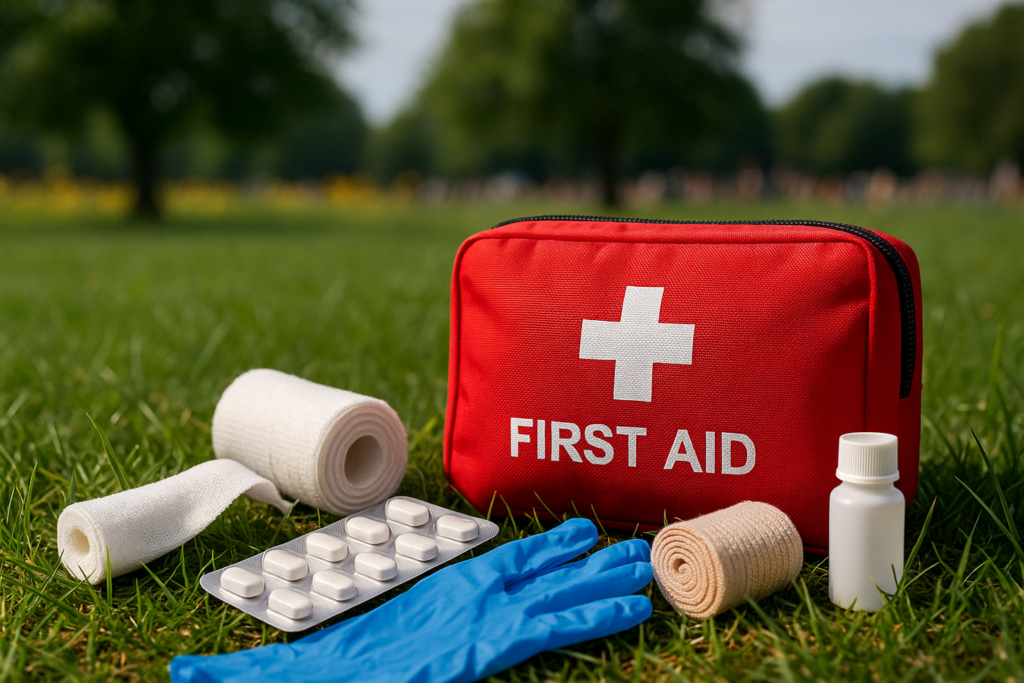
    first aid kit for spring events in NSW