Author: admin

  • Summer Safety Tips for Sydney Families (Stay Safe, Stay Active)

    Summer Safety Tips for Sydney Families (Stay Safe, Stay Active)

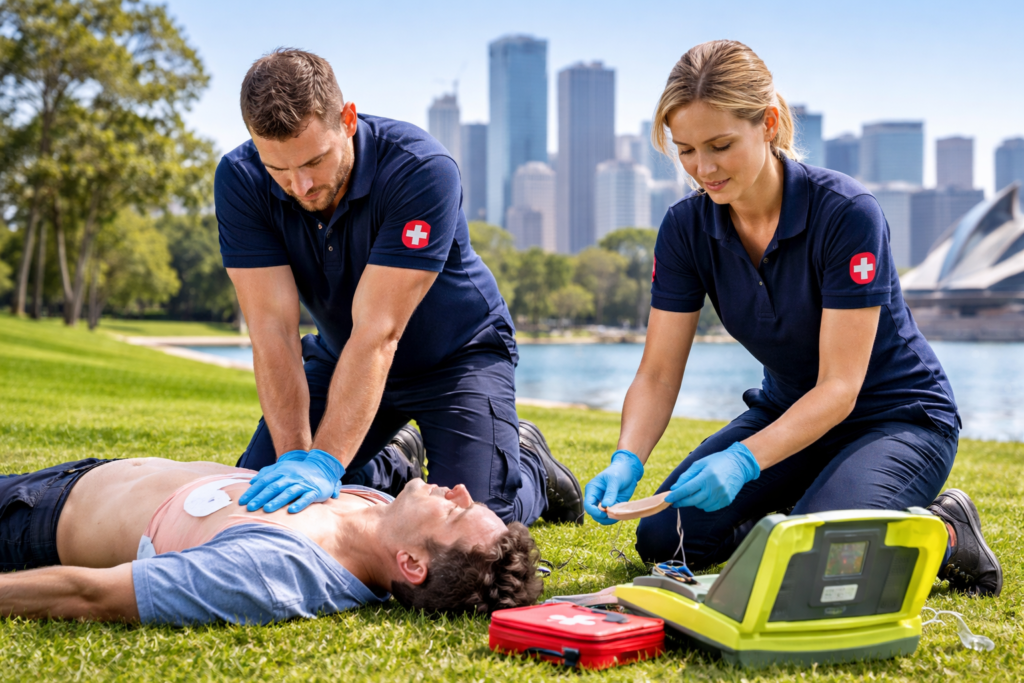
    Summer in Sydney means beach days, outdoor workouts, and family fun. However, with the heat and activity levels rising, safety becomes more important than ever. Whether you’re at the gym, park, or beach, knowing basic first aid and CPR can make all the difference.

    ☀️ Why Summer Safety Matters More Than You Think

    During summer, risks increase due to:

    • Heat exhaustion and dehydration
    • Water-related incidents
    • Sports and gym injuries
    • Allergic reactions (insects, food, environment)

    That’s why Sydney families should be prepared, not reactive.

    🏋️ 1. Stay Hydrated (Especially During Workouts)

    If you’re hitting the gym or training outdoors:

    • Drink water before, during, and after exercise
    • Avoid peak heat hours (11am–3pm)
    • Watch for dizziness or fatigue

    💡 Kids and teens are especially vulnerable during sports and training sessions.

    ❤️ 2. Know CPR – It Could Save a Life

    Cardiac emergencies don’t just happen in hospitals—they can happen:

    • At the gym
    • At the beach
    • During sports

    Learning CPR gives you the confidence to act fast.

    👉 Get certified here

    🏊 3. Water Safety is Non-Negotiable

    Sydney summers = pools, beaches, and water parks.

    Always:

    • Supervise children closely
    • Learn basic rescue skills
    • Know CPR in case of emergencies

    Even strong swimmers can get into trouble.

    🧴 4. Sun Protection is Essential

    Protect your family from harsh UV exposure:

    • Apply SPF 30+ sunscreen
    • Wear hats and protective clothing
    • Reapply every 2 hours

    Heatstroke can escalate quickly—especially during sports or gym sessions.

    🩹 5. Be Ready for Injuries (Gym + Outdoor Activities)

    From minor cuts to muscle strains:

    • Keep a basic first aid kit nearby
    • Know how to respond quickly
    • Treat injuries early to avoid complications

    👉 Learn full first aid skills

    👶 6. Extra Safety for Families with Children

    If you have kids:

    • Learn choking response
    • Understand asthma and allergy care
    • Be aware of child-specific emergencies

    👉 Child protection & safety training

    🏋️ 7. Gym Safety During Summer

    Gyms can get hotter and more intense in summer.

    Stay safe by:

    • Taking breaks between sets
    • Cleaning equipment to avoid infections
    • Knowing where emergency equipment (like AEDs) are

    💡 If your gym doesn’t have an AED, that’s a serious safety gap.

    🚑 8. Be Prepared, Not Panicked

    Emergencies are unpredictable—but your response doesn’t have to be.

    With proper training:

    • You stay calm
    • You act quickly
    • You potentially save a life

    Final Thoughts

    Sydney summers are amazing—but safety should always come first.

    By learning CPR, first aid, and basic safety skills, you’re not just protecting yourself—you’re protecting your family and community.

    FAQs

    Dehydration, sunburn, heat exhaustion, and sports injuries are the most common.

    Yes. CPR can save lives in emergencies like drowning or cardiac arrest.

    Supervision, sun protection, hydration, and basic first aid knowledge are key.

    Highly recommended. It prepares you for a wide range of situations.
    Where can I learn CPR in Sydney?

    You can get certified quickly here

  • Why AEDs Should Be Mandatory in Every Gym in Sydney

    Why AEDs Should Be Mandatory in Every Gym in Sydney


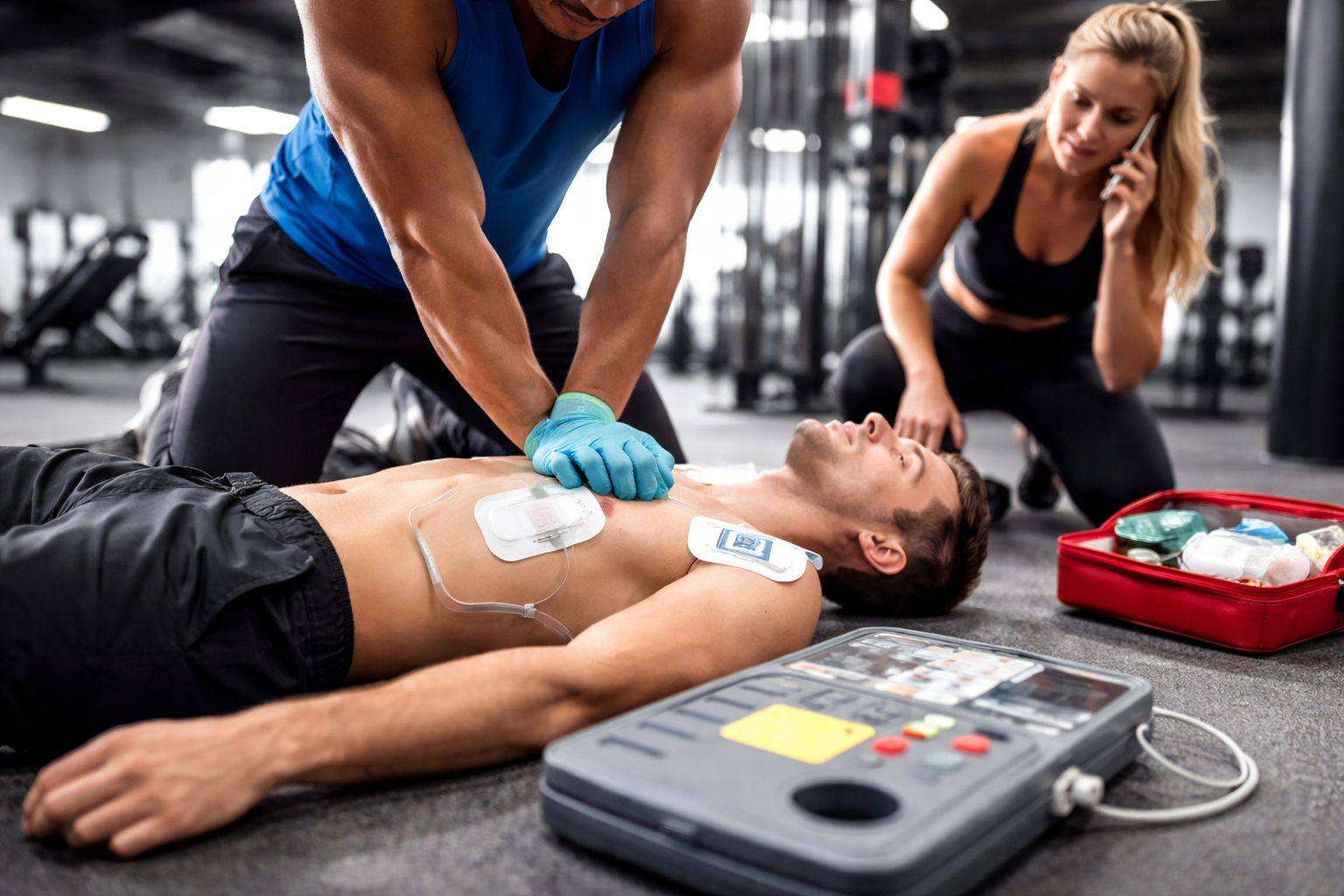
    When people walk into a gym, they expect to get fitter—not face a life-threatening emergency. However, intense workouts can put serious stress on the heart.

    That’s exactly why AEDs (Automated External Defibrillators) should be mandatory in every gym.

    Because when cardiac arrest happens, every second counts.

    What is an AED? (And Why It Matters in a Gym)

    An AED is a portable, life-saving device that:

    • Detects abnormal heart rhythms
    • Delivers a shock to restore normal heartbeat

    Most importantly, it’s designed for anyone to use—even without medical experience.

    In a gym setting, where heart rates are pushed to the limit, AEDs are not just helpful—they’re critical.

    Why Gyms Are High-Risk Environments

    Let’s be real—gyms are intense environments.

    People are:

    • Lifting heavy weights
    • Doing high-intensity interval training (HIIT)
    • Pushing their cardiovascular limits

    While exercise is generally safe, underlying heart conditions can go unnoticed—until it’s too late.

    💡 Sudden cardiac arrest can happen to:

    • Young athletes
    • Experienced lifters
    • First-time gym members

    The First Few Minutes Can Decide Everything

    When someone goes into cardiac arrest:

    • Brain damage can begin in 4–6 minutes
    • Survival rates drop every minute without CPR or defibrillation

    This is where AEDs make all the difference.

    ➡️ Using an AED within the first few minutes can increase survival rates dramatically

    CPR Alone Isn’t Always Enough

    CPR keeps blood flowing—but it doesn’t restart the heart.

    That’s why the combination is critical:

    • CPR buys time
    • AED saves the life

    👉 Learn CPR skills here

    “Why AEDs Should Be Mandatory in Every Gym”

    1. Immediate Response Saves Lives

    Gyms can’t rely on ambulances alone. An AED allows instant action.

    2. Members Expect Safety

    Just like having clean equipment, safety should be standard. AEDs build trust and professionalism.

    3. Legal & WHS Responsibility

    Under workplace health and safety (WHS) expectations in NSW, businesses must:

    • Minimise risks
    • Be prepared for emergencies

    Having AEDs—and trained staff—helps meet these obligations.

    4. Staff Confidence & Preparedness

    When staff are trained in first aid and CPR, they can act quickly and confidently.

    👉 First aid training

    Real Scenario: What Happens Without an AED

    Imagine this:

    A member collapses during a workout.
    They’re not breathing. No pulse.

    Without an AED:

    • Staff perform CPR
    • They wait for emergency services
    • Time ticks away

    With an AED:

    • Immediate shock delivered
    • Higher survival chance
    • Life potentially saved within minutes

    It’s Not Just Equipment—It’s a System

    For true safety, gyms need:

    • AED on-site
    • Staff trained in CPR
    • Regular refresher training
    • Clear emergency response plan

    👉 Consider group training for your team

    What About Fitness Trainers & Personal Trainers?

    If you’re a PT or gym owner, this is even more important.

    You are:

    • Responsible for client safety
    • Often the first responder in an emergency

    Having CPR certification isn’t optional—it’s essential.

    Final Thoughts: Safety Should Never Be Optional

    At the end of the day, gyms are about improving lives—not risking them.

    So, making AEDs mandatory isn’t just a smart decision.
    It’s a life-saving one.

    FAQs

    Yes. AEDs give clear voice instructions, making them simple for anyone to operate.

    While not always mandatory, they are strongly recommended under WHS risk management practices.

    CPR should be refreshed every 12 months.

    CPR helps, but an AED is often needed to restore a normal heart rhythm.

    Yes. Most gyms require it, and it’s essential for client safety.

  • What CPR Instructors Wish Students Knew (Before Their First Class)

    What CPR Instructors Wish Students Knew (Before Their First Class)


    Real Insights to Help You Pass Faster, Perform Better & Stay Confident

    If you’re about to take a CPR or first aid course in Sydney, you’re probably wondering:

    👉 “Is it hard?”
    👉 “Will I pass?”
    👉 “What should I prepare?”

    The truth is — most students worry about the wrong things.

    In this guide, we’ll share what CPR instructors actually wish students knew before stepping into class — so you can feel confident, save time, and get certified faster.

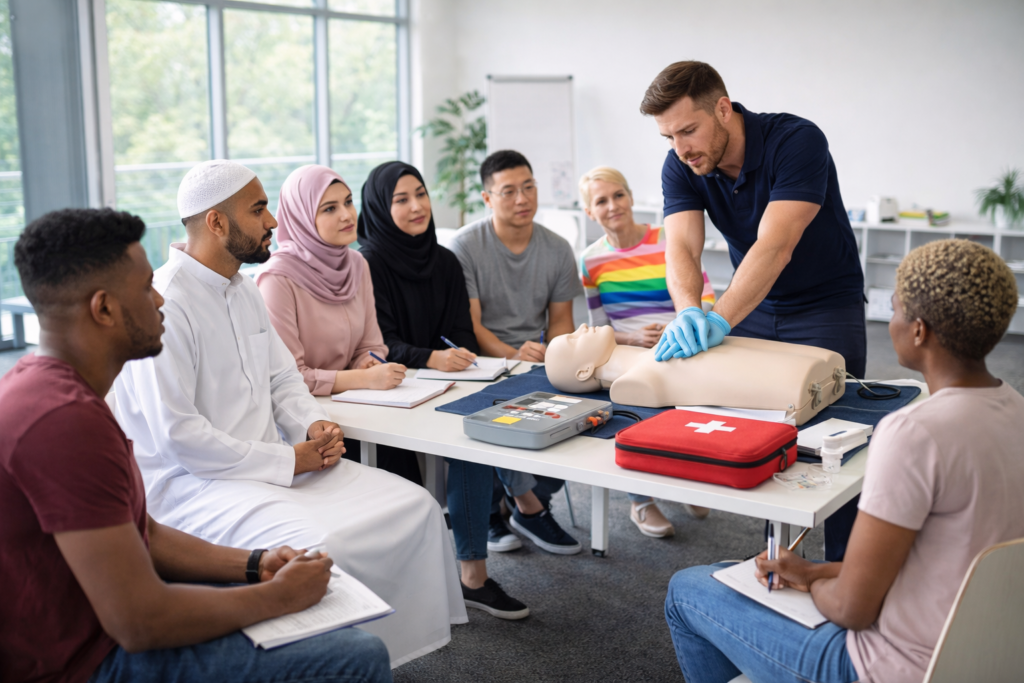
    Diverse group of adults attending a CPR training session with an instructor demonstrating chest compressions on a mannequin

    It’s Not About Being Perfect — It’s About Being Prepared

    First of all, many students think they need to perform CPR perfectly.

    However, instructors don’t expect perfection.

    Instead, they focus on:

    • Your understanding of the steps
    • Your ability to stay calm
    • Your willingness to act in an emergency

    👉 This is exactly what you learn in the CPR course:

    Therefore, even if you’re nervous, showing effort and following instructions correctly is what matters most.

    CPR Is Physically Simple — But Technique Matters

    At first glance, CPR looks easy.

    However, proper technique makes all the difference.

    Instructors often say students struggle with:

    • Correct compression depth
    • Maintaining rhythm
    • Proper hand placement

    As a result, practising with a mannequin during training is essential.

    Most Students Forget the Basics

    Surprisingly, many people overlook the most important steps.

    Before CPR begins, you must:

    1. Check for danger
    2. Check for response
    3. Call for help (000 in Australia)
    4. Check breathing

    Only then do you start CPR.

    👉 These steps are reinforced in

    So, understanding the full process — not just compressions — is key.

    Confidence Is More Important Than Speed

    Many students rush.

    However, instructors prefer:

    • Controlled actions
    • Clear thinking
    • Consistent rhythm

    In other words, confidence saves lives — not panic.

    You Don’t Need Medical Experience

    One of the biggest misconceptions is:

    👉 “I need a healthcare background to pass.”

    This is completely false.

    CPR and first aid courses are designed for:

    • Beginners
    • Everyday people
    • Workplace staff

    Therefore, anyone can learn and pass with the right guidance.

    Real-Life Scenarios Feel Different

    During training, everything is structured.

    However, in real life:

    • There is pressure
    • There is noise
    • There is urgency

    That’s why instructors emphasise:

    • Repetition
    • Scenario-based learning
    • Muscle memory

    CPR Certification Must Be Renewed Every Year

    Another thing many students don’t realise:

    👉 CPR certification is only valid for 12 months

    So even if you pass once, you must refresh your skills annually.

    👉 CPR refresher course

    First Aid + CPR Is the Best Combination

    While CPR alone is useful, most workplaces require full first aid certification.

    👉 Provide First Aid (HLTAID011)

    This includes:

    • CPR
    • Wound care
    • Medical emergencies
    • Workplace incidents

    Therefore, it’s the most practical and widely accepted qualification.

    Childcare & Industry Roles Need Extra Training

    If you work with children, additional requirements apply.

    👉 Child Protection Course

    👉 Childcare First Aid (HLTAID012)


    These ensure compliance with:

    The Course Is Faster Than You Think

    Many students expect a full-day course.

    However, modern training is much faster:

    • CPR: ~30 minutes practical
    • First Aid: ~1 hour practical

    Additionally, online pre-study makes the process even more efficient.

    Common Mistakes Students Make

    Avoid these common issues:

    • ❌ Not completing online pre-study
    • ❌ Rushing compressions
    • ❌ Forgetting safety checks
    • ❌ Not asking questions
    • ❌ Letting certification expire

    Why Students Choose Training NSW

    • Fast-track certification
    • Same-day or next-day certificate
    • Sydney location (Chester Hill, near Bankstown)
    • On-site training available
    • Nationally recognised courses

    👉 On-site training for businesses

    Compliance & Certification Standards

    Training is delivered in partnership with: (RTO 3399)

    You can verify course standards ↩️

    Industry safety insights ↩️

    FAQ – CPR Training Sydney

    No. With proper guidance, most students learn quickly and pass on their first attempt.

    Typically around 30 minutes practical (with online pre-study).

    No. Courses are designed for beginners.

    First Aid (HLTAID011) is recommended as it includes CPR and covers more scenarios.

    Yes, many workplaces require CPR certification for WHS compliance.

    At the end of the day, CPR training isn’t about passing a course — it’s about being ready to save a life.

    If you understand the basics, stay calm, and follow the process, you’ll not only pass — you’ll be prepared.

  • WHS Requirements NSW | First Aid & CPR Compliance Sydney

    WHS Requirements for Small Businesses NSW: First Aid & CPR Compliance Guide Sydney

    Running a small business in Sydney comes with many responsibilities. However, one of the most important — and often overlooked — is understanding your WHS requirements in NSW.

    Whether you operate a childcare centre, construction site, office, or retail store, you must ensure your workplace is safe, compliant, and prepared for emergencies.

    In this guide, we’ll break down workplace safety compliance in Sydney, explain first aid requirements for businesses, and show exactly what training your staff need.

    #1 First Aid & CPR Provider’s in Sydney ⭐

    Posted on Google Google
    Đăng Khôi Nguyễn profile picture
    Đăng Khôi Nguyễn
    Google star 1Google star 2Google star 3Google star 4Google star 5Trustindex verifies that the original source of the review is Google.
    All good
    Posted on Google Google
    Brenda De Filippis profile picture
    Brenda De Filippis
    Google star 1Google star 2Google star 3Google star 4Google star 5Trustindex verifies that the original source of the review is Google.
    We completed group training on-site and had an excellent experience from start to finish. Muhammad was professional, accommodating, and made the entire process feel effortless. Communication was strong and prompt throughout. I would not hesitate to recommend their services to anyone.
    Posted on Google Google
    Renee Kimani profile picture
    Renee Kimani
    Google star 1Google star 2Google star 3Google star 4Google star 5Trustindex verifies that the original source of the review is Google.
    The lessons were really educative. Mohammad Sadiqui was really helpful through the training. Loved it.
    Posted on Google Google
    Mariam A profile picture
    Mariam A
    Google star 1Google star 2Google star 3Google star 4Google star 5Trustindex verifies that the original source of the review is Google.
    Mohamad siddique is a great instructor. I always do my first aid and CPR here
    Posted on Google Google
    Jacob Jida profile picture
    Jacob Jida
    Google star 1Google star 2Google star 3Google star 4Google star 5Trustindex verifies that the original source of the review is Google.
    Mohammad siddiqua was very understandable and caring, he spoke to us one by one and loved working with us and giving his knowledge of experience, would highly recommend coming and doing your cpr and first aid course hereb
    Posted on Google Google
    Naomi Gituati profile picture
    Naomi Gituati
    Google star 1Google star 2Google star 3Google star 4Google star 5Trustindex verifies that the original source of the review is Google.
    My experience was amazing and educating
    Posted on Google Google
    Ryan Kipchumba profile picture
    Ryan Kipchumba
    Google star 1Google star 2Google star 3Google star 4Google star 5Trustindex verifies that the original source of the review is Google.
    Fantastic educational and very supportive
    Posted on Google Google
    Massey Shirazi profile picture
    Massey Shirazi
    Google star 1Google star 2Google star 3Google star 4Google star 5Trustindex verifies that the original source of the review is Google.
    NSW TRAINING trainer was one of the most energetic and positive person in CPR training

    What Are WHS Requirements in NSW?

    To begin with, WHS (Work Health and Safety) laws require all businesses in NSW to:

    • Provide a safe working environment
    • Minimise risks to employees and visitors
    • Ensure staff are properly trained
    • Be prepared for emergencies, including medical incidents

    In other words, WHS is not optional — it is a legal requirement.

    As a result, failing to comply with workplace safety laws can lead to:

    • Fines and penalties
    • Legal liability
    • Increased workplace incidents

    First Aid Requirements for Small Businesses in NSW

    Most importantly, one of the core WHS requirements for small businesses is first aid readiness.

    Every workplace must have:

    • A fully stocked first aid kit
    • At least one trained first aider available at all times
    • Clear emergency response procedures

    For most businesses, the required course is: Provide First Aid (HLTAID011)

    This course covers:

    • CPR techniques
    • Managing injuries and illnesses
    • Workplace emergency response

    Therefore, it is considered the standard workplace first aid requirement in Australia.

    CPR Training Requirements for Workplaces

    In addition to first aid certification, CPR training is also essential.

    In fact, CPR must be refreshed every 12 months to remain compliant.

    Recommended course: Provide CPR (HLTAID009)

    This is particularly important for:

    • Gyms and fitness centres
    • Construction and trade workers
    • Customer-facing businesses
    • High-risk environments

    Consequently, keeping CPR training up to date ensures your team can respond effectively during critical situations.

    Industry-Specific WHS Compliance (Childcare & More)

    While general workplace safety applies to all businesses, some industries have additional WHS compliance requirements.

    Childcare & Education Sector

    For example, if you work with children, you must complete:

    • First Aid (HLTAID012)
    • Child Protection training

    Accredited Child Protection Course ↩️

    This ensures compliance with:

    • NSW mandatory reporting laws
    • Child safety frameworks
    • Regulations guided by ACECQA

    🔗 Learn more: https://www.acecqa.gov.au/

    Workplace Risk Management & Emergency Planning

    Beyond training, businesses must also implement proper risk management strategies.

    Specifically, you are required to:

    • Identify workplace hazards
    • Assess risks
    • Apply control measures
    • Train staff in emergency procedures

    For instance, this includes:

    • Fire safety protocols
    • Medical emergency response
    • Evacuation plans

    Therefore, combining training with planning ensures full WHS compliance.

    Training Certification & Compliance Records

    Equally important, all businesses must maintain proper documentation.

    This includes:

    • Staff training records
    • Valid certificates
    • Incident reports

    Moreover, certificates must be issued by a recognised training provider.

    👉 Training NSW delivers courses in partnership with ABCFirst-Aid (RTO#3399)

    You can also verify qualifications via ↩️

    Additionally, industry safety standards can be explored through ↩️

    WHS Compliance Checklist for Small Businesses (Sydney)

    To simplify things, here’s a quick compliance checklist:

    ✔ First aid kit available
    ✔ CPR-trained staff (updated yearly)
    ✔ First aid certification (HLTAID011)
    ✔ Emergency procedures in place
    ✔ Training records maintained
    ✔ Industry-specific compliance completed

    As you can see, meeting WHS requirements is straightforward when approached step by step.

    Common WHS Mistakes Small Businesses Make

    Unfortunately, many businesses still fall short.

    Here are the most common mistakes:

    • ❌ No trained first aider on-site
    • ❌ Expired CPR certificates
    • ❌ No documented emergency plan
    • ❌ Missing compliance records
    • ❌ Ignoring industry-specific training

    Therefore, staying proactive is key to avoiding risks and penalties.

    Why Choose Training NSW for Workplace Compliance

    When it comes to meeting WHS requirements in Sydney, choosing the right training provider makes a difference.

    Training NSW offers:

    • Fast-track courses (30–60 minutes practical sessions)
    • Same-day or next-day certificates
    • Convenient Sydney location (Chester Hill, near Bankstown)
    • On-site group training for businesses
    • Nationally recognised certification

    Explore on-site workplace training

    WHS Requirements NSW: Final Thoughts

    In summary, staying compliant with WHS requirements for small businesses in NSW is essential.

    To remain compliant, you should:

    • Ensure staff complete first aid training
    • Keep CPR certification updated annually
    • Implement workplace safety procedures
    • Maintain accurate training records

    Ultimately, WHS compliance is not just about legal obligations — it’s about protecting your team, your customers, and your business.


    FAQ – WHS Requirements for Small Businesses NSW

    Businesses must provide a safe workplace, ensure first aid readiness, train staff, and implement risk management procedures.

    Yes. Most workplaces must have at least one trained first aider with HLTAID011 certification.

    CPR must be renewed every 12 months to remain compliant.

    Provide First Aid (HLTAID011) is the most common requirement across industries.

    Yes. They must complete childcare first aid and accredited child protection training.

    Yes. Training NSW offers on-site group training tailored to workplace needs.

    Businesses may face fines, legal consequences, and increased liability during workplace incidents.

    Book Your WHS-Compliant Training Today

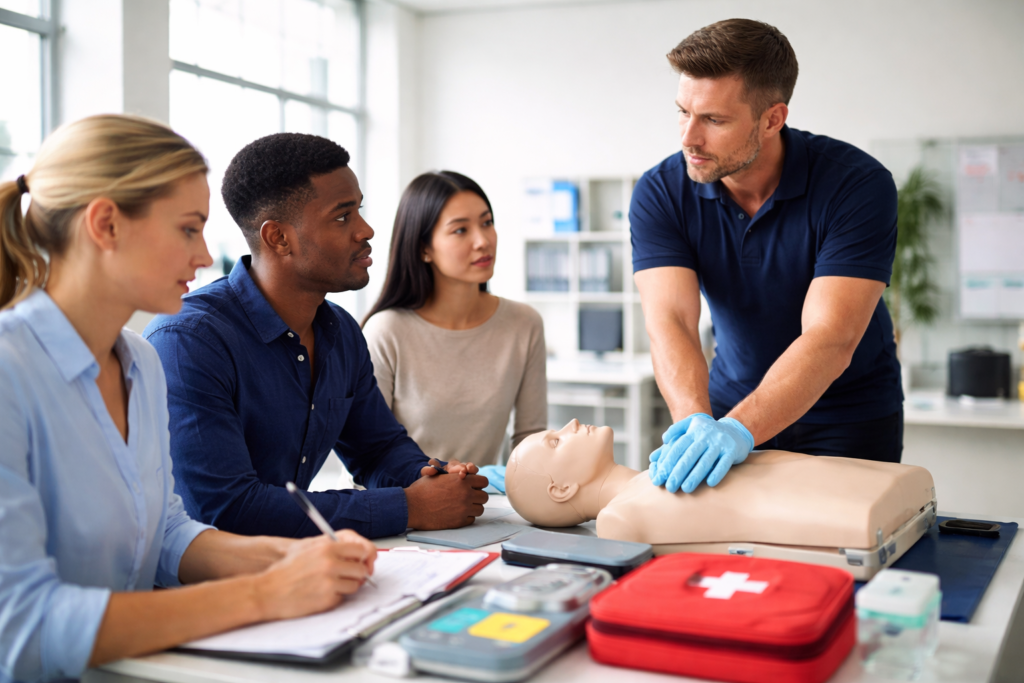
    Workplace first aid training session in Sydney demonstrating CPR for WHS compliance requirements in NSW small business
  • A Day in the Life of a First Aid Trainer in Sydney | Training NSW

    A Day in the Life of a First Aid Trainer in Sydney

    Being a first aid trainer in Sydney is far more than standing at the front of a classroom. In reality, it’s a fast-paced, hands-on role that blends teaching, compliance, and real-world emergency experience. From early morning course setup to issuing nationally recognised certificates by day’s end, each day plays a vital role in improving workplace and community safety across NSW.

    At Training NSW (TNSW), our trainers deliver first aid training in Sydney both at our Chester Hill centre and onsite across Greater Sydney. Here’s a closer look at what a typical day looks like for a Sydney first aid instructor.

    Early Morning: Preparation Before the First Aid Class Begins

    To begin with, the day starts early. A professional first aid trainer in Sydney arrives well before students to prepare equipment, paperwork, and learning spaces. This preparation ensures every course runs smoothly and meets national standards.

    Morning setup typically includes:

    • CPR manikins and AED trainers

    • Bandages, slings, and first aid kits

    • Assessment checklists and compliance documentation

    • Course materials aligned with national units of competency

    Importantly, all training is delivered under our partner ABC First Aid (RTO 3399). As a result, every course is nationally recognised and aligned with standards published on training.gov.au.

    Morning Session: CPR Training With a First Aid Trainer in Sydney (HLTAID009)

    Most mornings begin with CPR training in Sydney, one of the most in-demand courses across NSW. This session is essential for fitness professionals, hospitality staff, security personnel, and everyday community members.

    The CPR – HLTAID009 course covers:

    • Adult, child, and infant CPR

    • AED operation

    • Responding confidently to cardiac emergencies

    Because classes are kept small, a first aid trainer in Sydney can give personalised feedback—adjusting hand placement, compression depth, and timing. Consequently, students leave feeling confident rather than overwhelmed.

    Midday: Delivering Provide First Aid Training Across Sydney (HLTAID011)

    As the day progresses, trainers often transition into Provide First Aid – HLTAID011, the most comprehensive and widely required course in NSW workplaces.

    This course includes:

    • CPR refresher and AED use

    • Managing bleeding, burns, fractures, and shock

    • Asthma and anaphylaxis response

    • Incident management in the workplace

    In many cases, this training is delivered onsite, allowing a Sydney first aid trainer to tailor scenarios to the actual risks of a workplace—whether it’s an office, warehouse, school, or construction site. As a result, learning becomes immediately practical and relevant.

    Afternoon Sessions: Specialised First Aid Courses in NSW

    Depending on the schedule, afternoons are often dedicated to specialised training. This is where the role of a first aid trainer in Sydney becomes even more diverse.

    Childcare First Aid Training (HLTAID012)

    Designed for early childhood educators, this course aligns with requirements set by ACECQA and the National Quality Framework.

    LVR + CPR / First Aid Training (UETDRMP018)

    For electricians and high-risk workers, trainers deliver Low Voltage Rescue (LVR) combined with CPR or First Aid.

    👉 LVR + CPR – UETDRMP018 + HLTAID009
    👉 LVR + First Aid – UETDRMP018 + HLTAID011

    These sessions are highly practical and scenario-based, ensuring workers can respond decisively in real emergencies.

    Advanced First Aid Training (HLTAID014)

    Meanwhile, supervisors and team leaders often complete Advanced First Aid, which focuses on leadership during emergencies.

    End of Day: Assessments, Certificates & Compliance

    As the training day winds down, a first aid trainer in Sydney moves into assessment and administration. While this happens behind the scenes, it’s a crucial part of compliant training delivery.

    End-of-day tasks include:

    • Finalising practical assessments

    • Uploading attendance records

    • Issuing digital certificates (within 1 business day)

    • Answering student questions about renewals and compliance

    Because of this structured process, students leave knowing their certification is nationally recognised and workplace-ready.

    Why Being a First Aid Trainer in Sydney Is So Rewarding

    Above all, what makes the role fulfilling is impact. A first aid trainer in Sydney doesn’t just teach theory—they empower people with life-saving skills.

    • Each class improves safety across NSW

    • Students gain confidence to act in real emergencies

    • Training supports compliance while saving lives

    Whether it’s a parent learning CPR or a worker renewing certification, the difference is tangible and immediate.

    Industry Standards & Trusted Resources

    For those wanting to explore compliance and regulation further:

    Ready to Book First Aid Training in Sydney?


    Frequently Asked Questions (FAQ)

    A first aid trainer in Sydney must hold relevant first aid units, current TAE qualifications, and deliver training through a registered or partnered RTO.

    • CPR (HLTAID009): ~ 30 minutes

    • Provide First Aid (HLTAID011): 1 1/2 to 2 hours

    • Childcare First Aid (HLTAID012): 1 1/2 to 2 hours

    Yes. All certificates issued through Training NSW are nationally recognised Australia-wide.

    Absolutely. Onsite first aid training is available across Sydney and surrounding NSW regions.

    • CPR: Annually

    • First Aid: Every 3 years (or sooner depending on industry requirements)

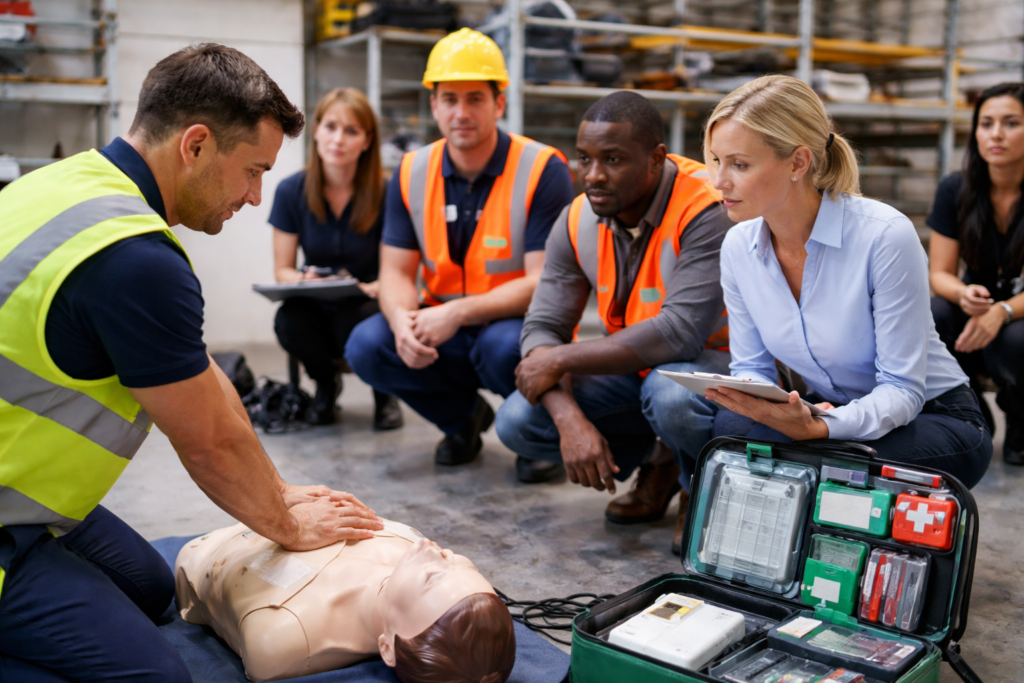
    First aid trainer in Sydney delivering CPR training with AED demonstration during a first aid course
  • Which First Aid Course in NSW? | CPR & First Aid

    Which First Aid Course Should I Take in NSW?

    If you’re asking which first aid course should I take in NSW, you’re not alone. With multiple nationally recognised options—such as CPR, Provide First Aid, Childcare First Aid, and Advanced First Aid—it’s easy to feel unsure about which certificate you actually need.

    However, once you understand your job role, workplace obligations, and industry requirements in NSW, choosing the right course becomes much clearer. In fact, most people only need one of a few common options.

    This guide will help you confidently decide which first aid course is best for you in NSW, especially if you’re based in Sydney or surrounding suburbs. Along the way, we’ll also cover first aid course requirements in NSW, renewal timeframes, and common mistakes to avoid.

    Why Choosing the Right First Aid Course in NSW Is Important

    First and foremost, first aid training in NSW is not just about gaining skills—it’s often a legal or regulatory requirement. Employers must ensure staff are trained appropriately, and employees are expected to hold the correct first aid certification, not just any certificate.

    If you choose the wrong course:

    • You may not meet workplace compliance

    • Your certificate could be rejected by employers

    • You may need to retrain sooner than expected

    On the other hand, choosing the correct course ensures:

    • Compliance with NSW workplace safety expectations

    • A smoother hiring process

    • Confidence to respond effectively in real emergencies

    That’s why understanding which first aid course you should take in NSW matters more than many people realise.

    Quick Answer: Which First Aid Course Should I Take in NSW?

    Before diving deeper, here’s a simple overview:

    Your SituationRecommended Course
    Unsure / general workplaceProvide First Aid – HLTAID011
    Job requires CPR onlyCPR – HLTAID009
    Childcare or early learningChildcare First Aid – HLTAID012
    Electrical or technical workLVR + CPR or LVR + First Aid
    Supervisory or high-risk roleAdvanced First Aid – HLTAID014
    Workplace group trainingOn-Site Group First Aid Training

    Now, let’s explore each option in more detail.

    CPR Course – HLTAID009 (NSW)

    If your employer has asked for CPR certification, then HLTAID009 Provide CPR is usually the course you need.

    This course focuses purely on life-saving CPR skills, including:

    • Adult, child, and infant CPR

    • AED (defibrillator) use

    • Responding to cardiac emergencies

    Importantly, CPR is often required in industries such as hospitality, construction support roles, fitness, and education.

    Key things to know:

    • CPR certification is valid for 12 months

    • It is the most basic first aid course in NSW

    • It can also be used as a refresher for higher-level first aid certificates

    If you’re asking “Is CPR enough for work in NSW?”, the answer is: sometimes. However, many employers prefer full first aid training.

    Provide First Aid – HLTAID011 (NSW)

    For most people wondering which first aid course should I take in NSW, the answer is HLTAID011 Provide First Aid.

    This is the most widely accepted first aid course in NSW and is suitable for:

    • General workplaces

    • Security staff

    • Aged care and disability support

    • Hospitality supervisors

    • Community and corporate roles

    In addition to CPR, this course covers:

    • Injury and illness management

    • Bleeding, burns, fractures, and shock

    • Emergency response procedures

    Because of its broad coverage, HLTAID011 is often the safest choice if you’re unsure which first aid certificate you need.

    Childcare First Aid – HLTAID012 (NSW)

    If you work in childcare or early education, it’s important to know that standard first aid is not enough.

    Under NSW and national childcare regulations, educators must complete HLTAID012 Childcare First Aid.

    This course is specifically designed for:

    • Long day care

    • Preschools and early learning centres

    • Family day care

    • Outside School Hours Care (OSHC)

    It includes:

    • Infant and child CPR

    • Asthma and anaphylaxis management

    • Child-focused emergency scenarios

    So, if you’re asking which first aid course should I take in NSW for childcare, the answer is always HLTAID012.

    LVR + CPR or LVR + First Aid (NSW)

    Electrical workers in NSW have additional safety obligations. If you work as an electrician, apprentice, or solar installer, you’ll typically need Low Voltage Rescue (LVR) combined with CPR or First Aid.

    These courses focus on:

    • Performing rescues from live low-voltage panels

    • Safely isolating power sources

    • Providing CPR or first aid after electrical incidents

    Because of strict compliance requirements, these courses are commonly audited and must be kept up to date.

    Advanced First Aid – HLTAID014 (NSW)

    For those working in high-risk or supervisory environments, Advanced First Aid HLTAID014 may be required.

    This course is ideal for:

    • Workplace first aid officers

    • Security teams

    • Remote or isolated worksites

    • Supervisors managing emergency response

    Unlike standard first aid, this course includes:

    • Advanced trauma management

    • Coordinating emergency teams

    • Managing incidents until paramedics arrive

    If your workplace risk level is higher, this may be the best first aid course in NSW for your role.

    On-Site & Group First Aid Training (Sydney & NSW)

    If you’re training multiple staff members, on-site group first aid training is often the most efficient solution.

    Instead of sending employees off-site, training is delivered:

    • At your workplace

    • With scenarios relevant to your environment

    • With minimal disruption to operations

    This option is popular across Sydney for:

    • Warehouses

    • Schools

    • Offices

    • Community organisations

    First Aid Training Locations in Sydney

    Location also plays a role when deciding which first aid course to take in NSW. Convenient access makes it easier to complete training and renew certificates on time.

    Training NSW offers accessible training locations across Sydney, including Chester Hill, with additional suburbs being rolled out to support local demand.

    First Aid Course Renewal in NSW

    Another important factor is renewal.

    Generally:

    • CPR must be renewed every 12 months

    • First Aid certificates are valid for 3 years

    • Annual CPR refreshers are recommended even within a valid first aid period

    Keeping your training current ensures ongoing compliance and confidence.

    Accreditation & Compliance (NSW)

    All Training NSW courses are:

    Final Thoughts: Which First Aid Course Should You Take in NSW?

    • General work: HLTAID011

    • Construction or trades: HLTAID009

    • Childcare: HLTAID012

    • Electrical: LVR + CPR

    • High-risk or supervisory roles: HLTAID014

    Get certified quickly with compliant training across Sydney and NSW.

    Frequently Asked Questions (FAQ)


    In most cases, HLTAID011 Provide First Aid is the best and safest option.

    Sometimes, yes. However, many employers prefer full first aid training rather than CPR alone.

    Childcare workers must complete HLTAID012 Childcare First Aid to meet regulatory requirements.

    If you work in a high-risk, supervisory, or remote environment, HLTAID014 Advanced First Aid may be required.

    Yes. Nationally recognised first aid courses are accepted across NSW and Australia.

    First aid training session in NSW showing CPR and first aid techniques in a Sydney classroom
  • WHS Obligations for NSW Employers: First Aid & Safety Compliance

    WHS Obligations for NSW Employers: Workplace Safety & First Aid Requirements Explained

    Understanding WHS obligations for NSW employers is essential for running a compliant, safe, and successful business. Whether you operate in construction, childcare, electrical services, hospitality, healthcare, or a standard office environment, New South Wales work health and safety laws clearly outline what employers must do to protect workers and the public.

    Importantly, WHS compliance is not optional. Instead, it is a legal responsibility that directly impacts staff wellbeing, business continuity, and risk exposure. Therefore, this guide explains employer duties, highlights required workplace safety and first aid training in NSW, and shows how businesses can stay compliant with confidence.

    What Are WHS Obligations for NSW Employers?

    Under the Work Health and Safety Act 2011 (NSW), employers—referred to as PCBUs (Persons Conducting a Business or Undertaking)—must ensure, so far as is reasonably practicable, the health and safety of workers and others.

    In practice, this means NSW employers must:

    • Provide a safe working environment

    • Identify and manage workplace hazards

    • Implement safe systems of work

    • Provide information, instruction, training, and supervision

    • Ensure access to adequate first aid

    As a result, workplace safety obligations in NSW apply to all businesses, regardless of size or industry, across Sydney and regional NSW.

    Who Is Responsible Under NSW WHS Laws?

    While everyone has a role to play, WHS duties are shared across multiple parties, including:

    • Employers and business owners (PCBUs)

    • Company directors and officers

    • Workers and contractors

    • Visitors and customers

    However, the primary duty of care always rests with the employer. Consequently, failing to meet WHS obligations for NSW employers can lead to penalties, fines, and serious reputational damage.

    Core WHS Obligations for NSW Employers

    1. Provide Adequate First Aid in the Workplace

    One of the most critical WHS obligations for NSW employers is ensuring effective first aid arrangements. This includes having:

    • Appropriately stocked first aid kits

    • Trained first aiders

    • Clear emergency procedures

    The type of first aid training required in NSW depends on workplace risk levels, staff numbers, and industry type.

    Commonly required courses include:

    Therefore, maintaining up-to-date first aid certification is a practical and legally sound way to meet NSW workplace safety requirements.

    2. Industry-Specific WHS Training Requirements in NSW

    In addition to general obligations, many industries face additional WHS compliance requirements.

    Childcare & Education Workplaces

    Childcare services must meet WHS standards as well as regulatory requirements set by ACECQA.

    Recommended training includes:

    As a result, childcare providers ensure both WHS compliance and alignment with National Quality Standards.

    Electrical & High-Risk Industries

    Electrical workers and contractors must maintain Low Voltage Rescue (LVR) and CPR competency.

    Relevant training options include:

    Accordingly, this training helps employers meet both WHS obligations and industry licensing expectations

    3. Provide Information, Training, and Supervision

    Another key part of WHS obligations for NSW employers is ensuring workers receive:

    • Proper inductions

    • Ongoing safety training

    • Adequate supervision

    Training must be:

    • Relevant to workplace hazards

    • Current and refreshed regularly

    • Documented and verifiable

    For this reason, employers should rely on nationally recognised courses listed on training.gov.au.

    4. Maintain Safe Systems of Work

    Safe systems of work support compliance and reduce incidents. These include:

    • Risk assessments

    • Safe Work Method Statements (SWMS)

    • Emergency response plans

    • Incident reporting systems

    Importantly, first aid and CPR training directly support these systems by ensuring workers can respond effectively when incidents occur.

    Why First Aid Training Is Essential for NSW WHS Compliance

    Although policies and paperwork are important, practical training is what protects people in real emergencies. First aid training:

    • Improves emergency response times

    • Reduces injury severity

    • Minimises downtime and compensation claims

    • Strengthens compliance during inspections

    Training NSW delivers nationally recognised courses in partnership with ABC First Aid, ensuring employers meet WHS obligations with confidence.

    What NSW WHS Inspectors Look For

    When assessing compliance, regulators typically check:

    • Evidence of current first aid training

    • Valid HLTAID certificates

    • Risk-based training decisions

    • Emergency preparedness procedures

    Therefore, maintaining up-to-date workplace safety and first aid training in NSW significantly reduces compliance risk.

    Stay Compliant with WHS Obligations in NSW

    Ultimately, meeting WHS obligations for NSW employers is about protecting people, reducing risk, and running a responsible business. With the right first aid and safety training in place, compliance becomes straightforward and manageable.

    Training NSW delivers compliant training across Sydney and NSW, including CPR, First Aid, Childcare First Aid, and high-risk industry courses.

    Book workplace safety and first aid training today.

    Frequently Asked Questions (FAQ)


    NSW employers must provide a safe workplace, manage risks, offer appropriate training, and ensure access to first aid.

    Yes. Employers must ensure adequate first aid arrangements, which usually includes trained first aiders.

    CPR (HLTAID009) should be refreshed every 12 months to remain compliant.

    Yes. Childcare workers must complete HLTAID012 Childcare First Aid, aligned with ACECQA requirements.

    All nationally recognised training can be verified on training.gov.au.

    First aid and CPR training session demonstrating WHS obligations for NSW employers in a workplace setting
  • NSW Workplace Slip, Trip and Fall Prevention: Practical Strategies for Every Industry

    NSW Workplace Slip, Trip and Fall Prevention: Practical Strategies for Every Industry

    A Practical NSW Workplace Safety Guide


    Slips, trips, and falls at work remain one of the most common causes of workplace injuries across NSW. Whether you operate a construction site, office, childcare centre, warehouse, or hospitality venue, these incidents can lead to serious injuries, lost productivity, and compliance breaches.

    Fortunately, learning how to reduce slips, trips, and falls at work is not complicated. With the right prevention strategies, safety systems, and first aid training, NSW workplaces can significantly reduce risk while meeting their legal obligations.

    In this guide, we’ll break down practical ways to prevent slips, trips, and falls, explain why first aid and CPR training is essential, and show how Sydney and NSW businesses can stay compliant and prepared.

    Why Slips, Trips, and Falls Are a Serious Workplace Safety Issue in NSW

    Across NSW, slips, trips, and falls are consistently reported as a leading cause of serious workplace injuries. In fact, many incidents occur during everyday tasks such as walking through corridors, entering buildings, or carrying equipment.

    Moreover, industries such as:

    • Construction and trades

    • Warehousing and logistics

    • Childcare and education

    • Healthcare and aged care

    • Retail and hospitality

    are particularly exposed to fall-related hazards.

    As a result, NSW employers are legally required under the WHS Act to identify hazards and actively reduce slips, trips, and falls at work.

    Common Causes of Slips, Trips, and Falls at Work

    Before prevention can begin, it’s important to understand what causes slips, trips, and falls in the workplace.

    Slips at Work

    Slips often happen when there is little friction between footwear and the floor. Common causes include:

    • Wet or greasy floors

    • Leaks or spills

    • Rainwater at entry points

    • Unsuitable footwear

    Trips at Work

    Trips usually occur due to obstructions or uneven surfaces, such as:

    • Loose cables and extension cords

    • Poor housekeeping

    • Uneven flooring or mats

    • Items left in walkways

    Falls at Work

    Falls are generally higher-risk incidents and may involve:

    • Working at heights

    • Unsafe ladders or platforms

    • Unprotected edges

    • Missing handrails

    Clearly, knowing these causes makes it much easier to reduce slip, trip, and fall hazards before injuries occur.

    How to Reduce Slips, Trips, and Falls at Work: Practical Strategies

    1. Improve Housekeeping and Floor Safety

    First and foremost, good housekeeping is one of the most effective ways to reduce slips, trips, and falls at work.

    • Clean spills immediately

    • Secure rugs and mats

    • Keep walkways clear

    • Use non-slip flooring where possible

    In childcare environments, this becomes even more critical. Staff should not only manage hazards but also be trained to respond to injuries appropriately through Childcare First Aid training.

    2. Use Clear Signage and Visual Controls

    Next, visual warnings play a vital role in fall prevention.

    • Wet floor signs

    • Temporary barricades

    • High-visibility edge markings

    However, signage alone is not enough. Workers must also know how to respond immediately if a slip or fall occurs.

    3. Enforce Appropriate Footwear and PPE

    Another effective method to reduce slips and trips at work is ensuring workers wear the right footwear.

    • Slip-resistant shoes

    • Industry-specific PPE

    • Regular inspection of worn footwear

    This is particularly important in kitchens, warehouses, and construction sites.

    4. Conduct Regular Risk Assessments

    Additionally, workplaces should routinely inspect and reassess hazards.

    • Identify high-risk areas

    • Repair damaged flooring

    • Improve lighting in walkways

    • Update safety procedures

    For sites with electrical exposure, combined LVR + CPR training is strongly recommended.

    5. Train Staff in First Aid and CPR

    Even with the best prevention systems in place, accidents can still happen. Therefore, training staff in first aid and CPR is essential when reducing the impact of slips, trips, and falls at work.

    Recommended nationally recognised courses include:

    Why First Aid Training Is Critical After a Workplace Fall

    When a fall occurs, the first few minutes are crucial. Properly trained staff can:

    • Assess spinal and head injuries

    • Control bleeding

    • Manage shock

    • Provide CPR if required

    • Prevent further harm

    In childcare and education settings, injury response also links directly to child protection and duty of care obligations.

    Compliance, Accreditation, and Trusted Authorities

    To further strengthen workplace safety systems, NSW businesses should rely on authoritative national bodies, including:

    These organisations help ensure training quality, compliance, and industry alignment.

    Build a safer, more compliant workplace — book your training today

    FAQs: Reducing Slips, Trips, and Falls at Work

    Wet or contaminated floors, especially near entrances and food preparation areas.


    Yes. They are one of the leading causes of lost-time injuries across NSW workplaces.


    While specific courses are not mandated, employers must ensure adequate first aid training and facilities are available.


    Advanced First Aid (HLTAID014) or LVR + First Aid is recommended for construction, electrical, and industrial environments.


    CPR training should be refreshed annually to remain current and effective.

    Reduce Workplace Risk and Stay Prepared

    Ultimately, learning how to reduce slips, trips, and falls at work requires a combination of hazard prevention, staff awareness, and emergency preparedness. By pairing proactive safety measures with nationally recognised first aid and CPR training, NSW workplaces can significantly reduce injury risk while staying compliant.

    If your workplace operates in Sydney or across NSW, TrainingNSW offers flexible, same-day, and weekend training options to suit your operational needs.

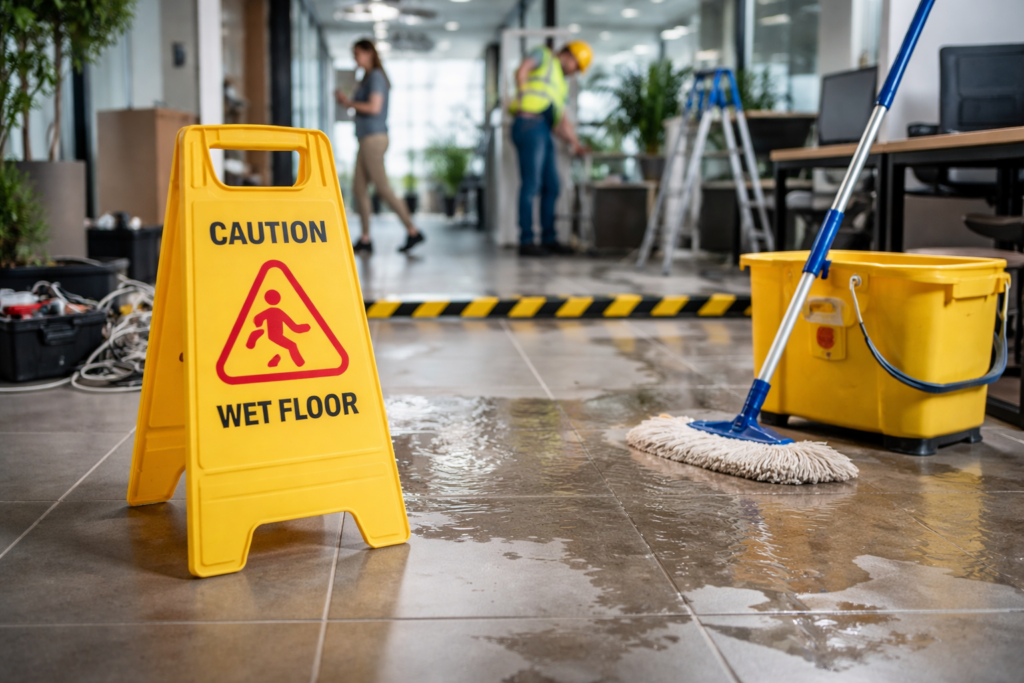
    Workplace safety measures showing how to reduce slips, trips, and falls at work in an NSW office environment
  • Workplace Safety for NSW Offices | First Aid & CPR

    WHS First Aid Requirements Every NSW Office Must Know

    Workplace safety is a critical responsibility for every office operating in New South Wales. In fact, whether you run a small professional office in Sydney, manage a corporate workspace in Parramatta, or oversee an expanding team in Western Sydney, understanding workplace safety basics for NSW offices is essential.


    Not only does workplace safety protect employees, but it also helps businesses meet legal obligations, reduce downtime, and create a safer, more productive working environment. Therefore, this guide explains the core office safety requirements in NSW, with a strong focus on first aid, CPR compliance, and nationally recognised training.

    Why Workplace Safety Basics Matter for NSW Offices

    Under the Work Health and Safety Act 2011 (NSW), employers are legally required to provide a safe workplace. While office environments are often considered low-risk, incidents still occur regularly.

    For example, common office hazards include:

    • Slips, trips, and falls

    • Poor ergonomics leading to musculoskeletal injuries

    • Sudden medical emergencies such as cardiac arrest

    • Fire and evacuation risks

    • Workplace stress and psychosocial hazards

    As a result, failing to address office safety in NSW can lead to injuries, workers’ compensation claims, legal penalties, and reduced staff morale.

    Core Workplace Safety Requirements for NSW Offices

    1. Workplace First Aid Requirements in NSW

    First and foremost, every NSW office must have adequate first aid arrangements. This includes:

    • A fully stocked first aid kit

    • Clear first aid procedures

    • Trained first aid officers

    The nationally recognised qualification for office workplaces is:

    👉 Provide First Aid – HLTAID011

    This course is essential for office safety compliance in NSW and covers:

    • Responding to medical emergencies

    • Managing bleeding, fractures, burns, and shock

    • CPR and AED use

    • Legal responsibilities and incident reporting

    Importantly, Training NSW delivers this course in partnership with ABC First Aid (RTO #3399), ensuring all training meets national standards listed on training.gov.au.

    2. CPR Compliance for NSW Office Staff

    In addition to first aid, CPR training is a key part of workplace safety basics for NSW offices. Sudden cardiac arrest can happen without warning, even in low-risk office environments.

    For this reason, SafeWork NSW strongly recommends CPR-trained staff, particularly where AEDs are available.

    The required unit is:

    Provide CPR – HLTAID009

    This course teaches:

    • Adult CPR techniques

    • Safe AED operation

    • Emergency response protocols

    Moreover, CPR training must be refreshed every 12 months, in line with Australian Resuscitation Council (ARC) guidelines.

    3. Child Protection Compliance for Relevant Offices

    Some NSW offices — particularly those involved in education, childcare, community services, or disability support — have additional responsibilities under child protection legislation.

    In these cases, accredited training is essential:

    👉 Child Protection Course – CHCPRT025

    This course supports compliance with:

    • NSW mandatory reporting laws

    • National child safety standards

    • Requirements recognised on training.gov.au

    Furthermore, services operating under early childhood regulations should align with guidance from ACECQA.

    Additional Safety Training for NSW Offices

    Depending on your office environment and industry, you may also require advanced or specialised training. Consequently, Training NSW offers:

    These options are particularly suitable for offices managing electrical equipment, higher-risk activities, or public-facing services.

    How to Create a Safer Office Environment in NSW

    While training is critical, workplace safety in NSW offices should also include preventative measures.

    Ergonomic Office Safety

    • Adjustable chairs and desks

    • Correct screen height and posture

    • Regular movement breaks

    Emergency Preparedness

    • Clear evacuation plans

    • Fire wardens and emergency signage

    • Regular emergency drills

    Mental Health and Wellbeing

    • Stress management policies

    • Reasonable workloads

    • Supportive reporting systems

    In addition, employers can refer to SafeWork NSW guidance and corporate governance resources from ASIC.

    Why NSW Offices Choose Training NSW

    Training NSW is a trusted provider of workplace safety training in Sydney and across NSW.

    • Sydney-based training provider
    • On-site and group office training available
    • Nationally recognised qualifications
    • Delivered in partnership with ABC First Aid (RTO #3399)
    • Courses aligned with SafeWork NSW, ARC, ACECQA, and training.gov.au

    As a result, NSW offices can remain compliant while building a confident, well-prepared workforce.

    Frequently Asked Questions (FAQ)

    Yes. NSW law requires workplaces to provide adequate first aid arrangements, including trained staff and appropriate equipment.

    This depends on workforce size, layout, and risk level. Generally, 1 first aider per 25–50 workers is recommended.

    CPR training (HLTAID009) must be refreshed every 12 months, in line with Australian Resuscitation Council guidelines.

    Only offices working with children or young people are required to complete accredited child protection training such as CHCPRT025.

    Yes. Training NSW provides on-site and group workplace training across Sydney and NSW, making compliance simple and efficient.

    Final Thoughts: Workplace Safety Is Essential for NSW Offices

    Ultimately, investing in workplace safety basics for NSW offices is not just about legal compliance — it is about protecting people, improving confidence, and strengthening your business.


    If your office operates in NSW and needs first aid, CPR, or child protection training, Training NSW is ready to help.

    Book Workplace Training Today

    Workplace safety basics for NSW offices showing first aid kit, fire extinguisher and office safety compliance in Sydney workplace
  • AED vs CPR: Why Sydney Needs Both to Save Lives

    AED vs CPR: Why You Need Both in Sydney

    When a sudden cardiac arrest occurs, every second counts. Across Sydney and New South Wales, thousands of people work, commute, study, and socialise every day—often unaware that survival in a cardiac emergency depends on both CPR and AED use. While many people search online for “AED vs CPR Sydney” or “CPR or AED – which is better?”, the truth is far more straightforward: you need both, working together.


    At Training NSW, we regularly see how combining CPR and AED training in Sydney empowers everyday people to save lives before emergency services arrive.

    What Is CPR and Why Is It Critical in Sydney?

    Cardiopulmonary Resuscitation (CPR) is a life-saving technique that manually keeps blood and oxygen flowing when the heart stops beating. In busy urban areas like Sydney, CPR is often the first response before an AED or ambulance becomes available.

    Most importantly, CPR:

    • Maintains circulation to the brain and heart

    • Slows the effects of oxygen deprivation

    • Dramatically improves outcomes when followed by AED use

    For this reason, CPR training in Sydney is a fundamental requirement across workplaces, childcare centres, gyms, and construction sites.

    Learn more or enrol in CPR – HLTAID009

    What Is an AED and How Does It Save Lives?

    An Automated External Defibrillator (AED) is a portable device that analyses heart rhythm and delivers an electrical shock when needed. Unlike CPR, which supports circulation, an AED addresses the electrical malfunction of the heart.

    AEDs are:

    • Designed for public and workplace use

    • Guided by clear voice prompts

    • Safe and effective even for first-time users

    In fact, early AED access combined with CPR can more than double survival rates. That is why AED availability in Sydney workplaces is increasingly encouraged and, in some industries, expected.

    AED use is included in nationally recognised first aid courses such as:

    Provide First Aid – HLTAID011

    AED vs CPR: Understanding the Difference

    Although CPR and AEDs are often discussed together, they perform different but complementary roles.

    CPRAED
    Manual chest compressionsAutomated heart rhythm analysis
    Keeps oxygenated blood flowingRestores normal heart rhythm
    Requires physical effortVoice-guided and user-friendly
    Must begin immediatelyMost effective within 3–5 minutes

    Therefore, when comparing AED vs CPR in Sydney, it’s clear that one does not replace the other. Instead, CPR buys time, while the AED fixes the problem.

    Why You Need Both CPR and AED Training in Sydney

    To put it simply, CPR without an AED often cannot restart the heart, while an AED without CPR may arrive too late to be effective. Together, however, they form the gold standard of cardiac emergency response.

    Across NSW:

    • Ambulance response times can vary

    • Many cardiac arrests occur in workplaces and homes

    • Immediate bystander action saves lives

    As a result, SafeWork-aligned organisations increasingly prioritise CPR and AED training in Sydney to meet duty-of-care obligations and improve safety outcomes.

    CPR and AED Courses Available at Training NSW

    At Training NSW, our courses are designed to suit different industries while embedding both CPR and AED competency.

    Childcare & Education

    Supervisors & High-Risk Workplaces

    Electrical & Construction Industry

    Child Safety Compliance

    Each course includes practical, hands-on training delivered by qualified trainers in Sydney.

    Who Should Learn CPR and AED Use?

    Because cardiac emergencies can happen anywhere, CPR and AED training in NSW is strongly recommended for:

    • Workplace first aid officers

    • Childcare educators (ACECQA-aligned)

    • Construction and electrical workers

    • Fitness centres and sports clubs

    • Parents, carers, and community members

    All Training NSW courses are delivered in partnership with ABC First Aid and meet national standards.

    National Standards and Compliance

    Training NSW courses align with:

    Consequently, your certification remains nationally recognised, compliant, and audit-ready.

    FAQs: AED vs CPR in Sydney

    While CPR keeps blood flowing, it usually cannot restart the heart. An AED is often essential for survival.

    Yes. AEDs are designed for public use. However, formal CPR and AED training in Sydney improves speed and confidence.

    Requirements vary by industry, but many NSW workplaces are strongly encouraged or required to have AEDs and trained staff.

    CPR is renewed annually, while First Aid certification is valid for three years, with CPR refreshed yearly.

    Courses such as HLTAID011 and HLTAID014 include comprehensive CPR and AED instruction.

    Final Thoughts: AED vs CPR — The Best Answer Is Both

    When it comes to AED vs CPR in Sydney, the debate ends quickly. CPR buys crucial time, AEDs restore life-saving rhythm, and together they save lives.

    If you live or work in Sydney or greater NSW, investing in CPR and AED training with Training NSW ensures you’re prepared when it matters most.

    Book your CPR, AED, or First Aid course today
    Chester Hill, NSW | Serving Sydney-wide
    1300 000 765 | https://trainingnsw.org

    Book Your CPR & AED Training in Sydney


    What Our Sydney Students Say

    Posted on Google Google
    Đăng Khôi Nguyễn profile picture
    Đăng Khôi Nguyễn
    Google star 1Google star 2Google star 3Google star 4Google star 5Trustindex verifies that the original source of the review is Google.
    All good
    Posted on Google Google
    Brenda De Filippis profile picture
    Brenda De Filippis
    Google star 1Google star 2Google star 3Google star 4Google star 5Trustindex verifies that the original source of the review is Google.
    We completed group training on-site and had an excellent experience from start to finish. Muhammad was professional, accommodating, and made the entire process feel effortless. Communication was strong and prompt throughout. I would not hesitate to recommend their services to anyone.
    Posted on Google Google
    Renee Kimani profile picture
    Renee Kimani
    Google star 1Google star 2Google star 3Google star 4Google star 5Trustindex verifies that the original source of the review is Google.
    The lessons were really educative. Mohammad Sadiqui was really helpful through the training. Loved it.
    Posted on Google Google
    Mariam A profile picture
    Mariam A
    Google star 1Google star 2Google star 3Google star 4Google star 5Trustindex verifies that the original source of the review is Google.
    Mohamad siddique is a great instructor. I always do my first aid and CPR here
    Posted on Google Google
    Jacob Jida profile picture
    Jacob Jida
    Google star 1Google star 2Google star 3Google star 4Google star 5Trustindex verifies that the original source of the review is Google.
    Mohammad siddiqua was very understandable and caring, he spoke to us one by one and loved working with us and giving his knowledge of experience, would highly recommend coming and doing your cpr and first aid course hereb
    Posted on Google Google
    Naomi Gituati profile picture
    Naomi Gituati
    Google star 1Google star 2Google star 3Google star 4Google star 5Trustindex verifies that the original source of the review is Google.
    My experience was amazing and educating
    Posted on Google Google
    Ryan Kipchumba profile picture
    Ryan Kipchumba
    Google star 1Google star 2Google star 3Google star 4Google star 5Trustindex verifies that the original source of the review is Google.
    Fantastic educational and very supportive
    Posted on Google Google
    Massey Shirazi profile picture
    Massey Shirazi
    Google star 1Google star 2Google star 3Google star 4Google star 5Trustindex verifies that the original source of the review is Google.
    NSW TRAINING trainer was one of the most energetic and positive person in CPR training
    AED vs CPR training in Sydney showing CPR and AED used together during a cardiac emergency