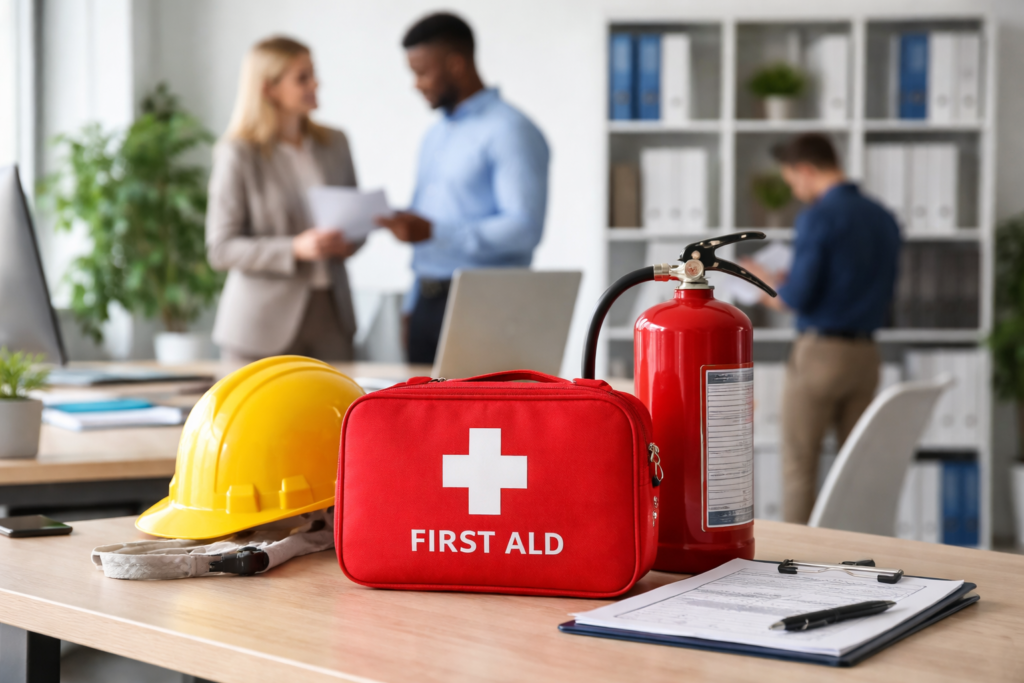
Workplace safety is a critical responsibility for every office operating in New South Wales. In fact, whether you run a small professional office in Sydney, manage a corporate workspace in Parramatta, or oversee an expanding team in Western Sydney, understanding workplace safety basics for NSW offices is essential.
Not only does workplace safety protect employees, but it also helps businesses meet legal obligations, reduce downtime, and create a safer, more productive working environment. Therefore, this guide explains the core office safety requirements in NSW, with a strong focus on first aid, CPR compliance, and nationally recognised training.
Under the Work Health and Safety Act 2011 (NSW), employers are legally required to provide a safe workplace. While office environments are often considered low-risk, incidents still occur regularly.
For example, common office hazards include:
Slips, trips, and falls
Poor ergonomics leading to musculoskeletal injuries
Sudden medical emergencies such as cardiac arrest
Fire and evacuation risks
Workplace stress and psychosocial hazards
As a result, failing to address office safety in NSW can lead to injuries, workers’ compensation claims, legal penalties, and reduced staff morale.
First and foremost, every NSW office must have adequate first aid arrangements. This includes:
A fully stocked first aid kit
Clear first aid procedures
Trained first aid officers
The nationally recognised qualification for office workplaces is:
👉 Provide First Aid – HLTAID011
This course is essential for office safety compliance in NSW and covers:
Responding to medical emergencies
Managing bleeding, fractures, burns, and shock
CPR and AED use
Legal responsibilities and incident reporting
Importantly, Training NSW delivers this course in partnership with ABC First Aid (RTO #3399), ensuring all training meets national standards listed on training.gov.au.
In addition to first aid, CPR training is a key part of workplace safety basics for NSW offices. Sudden cardiac arrest can happen without warning, even in low-risk office environments.
For this reason, SafeWork NSW strongly recommends CPR-trained staff, particularly where AEDs are available.
The required unit is:
This course teaches:
Adult CPR techniques
Safe AED operation
Emergency response protocols
Moreover, CPR training must be refreshed every 12 months, in line with Australian Resuscitation Council (ARC) guidelines.
Some NSW offices — particularly those involved in education, childcare, community services, or disability support — have additional responsibilities under child protection legislation.
In these cases, accredited training is essential:
👉 Child Protection Course – CHCPRT025
This course supports compliance with:
NSW mandatory reporting laws
National child safety standards
Requirements recognised on training.gov.au
Furthermore, services operating under early childhood regulations should align with guidance from ACECQA.
Depending on your office environment and industry, you may also require advanced or specialised training. Consequently, Training NSW offers:
These options are particularly suitable for offices managing electrical equipment, higher-risk activities, or public-facing services.
While training is critical, workplace safety in NSW offices should also include preventative measures.
Adjustable chairs and desks
Correct screen height and posture
Regular movement breaks
Clear evacuation plans
Fire wardens and emergency signage
Regular emergency drills
Stress management policies
Reasonable workloads
Supportive reporting systems
In addition, employers can refer to SafeWork NSW guidance and corporate governance resources from ASIC.
Training NSW is a trusted provider of workplace safety training in Sydney and across NSW.
As a result, NSW offices can remain compliant while building a confident, well-prepared workforce.
Yes. NSW law requires workplaces to provide adequate first aid arrangements, including trained staff and appropriate equipment.
This depends on workforce size, layout, and risk level. Generally, 1 first aider per 25–50 workers is recommended.
CPR training (HLTAID009) must be refreshed every 12 months, in line with Australian Resuscitation Council guidelines.
Only offices working with children or young people are required to complete accredited child protection training such as CHCPRT025.
Yes. Training NSW provides on-site and group workplace training across Sydney and NSW, making compliance simple and efficient.
Ultimately, investing in workplace safety basics for NSW offices is not just about legal compliance — it is about protecting people, improving confidence, and strengthening your business.
If your office operates in NSW and needs first aid, CPR, or child protection training, Training NSW is ready to help.