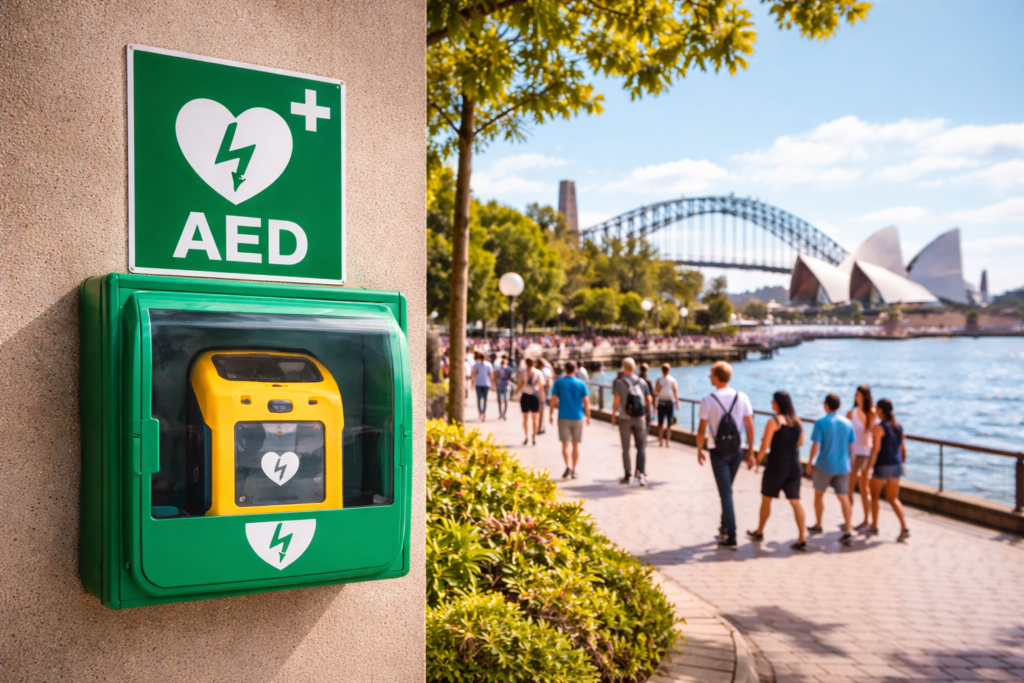
When sudden cardiac arrest strikes, every second matters. In fact, using an Automated External Defibrillator (AED) within the first few minutes can double or even triple survival chances.
That’s why knowing AED locations in Sydney isn’t just helpful—it’s essential.
An AED (Automated External Defibrillator) is a portable device that delivers a shock to restore a normal heart rhythm.
The best part?
👉 Anyone can use it—no medical background required.
AEDs are designed to:
AEDs are becoming more accessible across Sydney. However, many people still don’t know where to find them.
Here are the most common places you’ll find AEDs:
High-intensity workouts increase cardiac risk, making gyms one of the most critical places for AED access.
👉 Many modern gyms now have AEDs near reception or training areas.
Schools are increasingly equipped with AEDs to protect staff, students, and visitors.
👉 Especially important in childcare and education settings.
Large crowds = higher likelihood of emergencies.
You’ll often find AEDs:
Busy transport areas are key AED zones.
👉 Look for AED signage on platforms or near staff areas.
More workplaces are investing in AEDs as part of safety compliance.
👉 Especially in:
Sydney’s outdoor lifestyle makes AED access at beaches and parks crucial.
👉 Many lifeguard stations are equipped with AEDs.
Even with growing availability, finding an AED quickly can be challenging.
Here’s how to stay prepared:
Knowing where AEDs are is step one—knowing what to do is step two.
Follow these steps:
Sydney is a fast-paced, high-density city. Emergencies can happen anywhere—at the gym, work, or even during a family outing.
Therefore, knowing AED locations every Sydney resident should know can:
For official guidelines and safety standards:
AEDs are commonly found in gyms, shopping centres, workplaces, schools, transport hubs, and beaches.
Yes. AEDs are designed for public use and provide step-by-step instructions.
No, but training improves confidence and response time.
Look for AED signs or ask staff/security in public places.
Call 000, start CPR, and follow the AED instructions.
AEDs are everywhere—but only if you know where to look.
So next time you’re at the gym, shopping centre, or train station, take a second to notice where the AED is.
Because one day, that knowledge could save a life.
