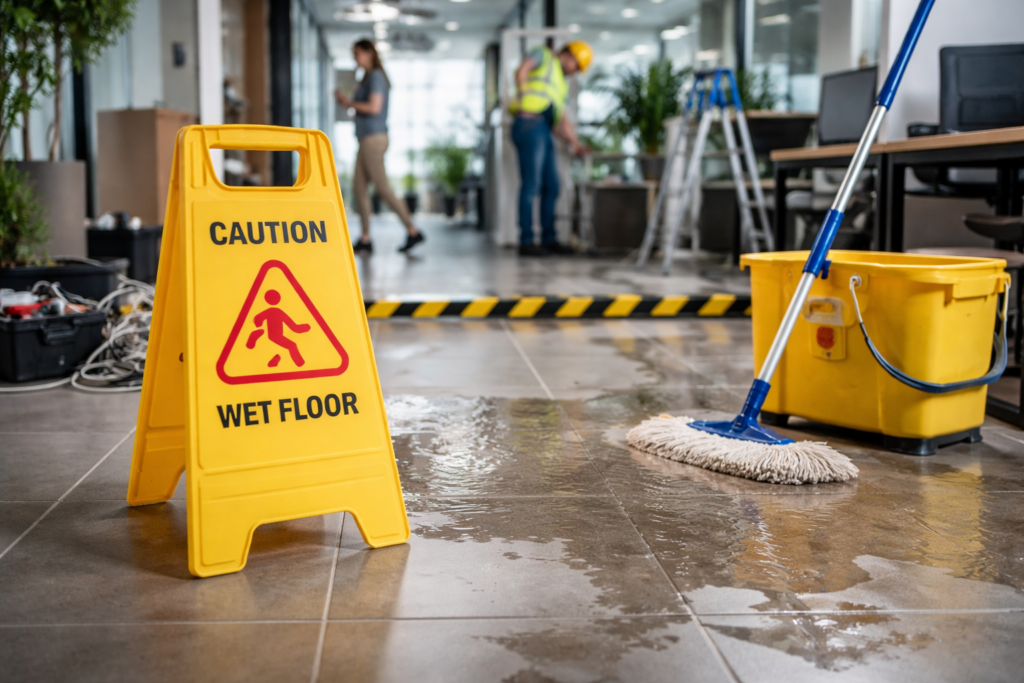
Slips, trips, and falls at work remain one of the most common causes of workplace injuries across NSW. Whether you operate a construction site, office, childcare centre, warehouse, or hospitality venue, these incidents can lead to serious injuries, lost productivity, and compliance breaches.
Fortunately, learning how to reduce slips, trips, and falls at work is not complicated. With the right prevention strategies, safety systems, and first aid training, NSW workplaces can significantly reduce risk while meeting their legal obligations.
In this guide, we’ll break down practical ways to prevent slips, trips, and falls, explain why first aid and CPR training is essential, and show how Sydney and NSW businesses can stay compliant and prepared.
Across NSW, slips, trips, and falls are consistently reported as a leading cause of serious workplace injuries. In fact, many incidents occur during everyday tasks such as walking through corridors, entering buildings, or carrying equipment.
Moreover, industries such as:
Construction and trades
Warehousing and logistics
Childcare and education
Healthcare and aged care
Retail and hospitality
are particularly exposed to fall-related hazards.
As a result, NSW employers are legally required under the WHS Act to identify hazards and actively reduce slips, trips, and falls at work.
Before prevention can begin, it’s important to understand what causes slips, trips, and falls in the workplace.
Slips often happen when there is little friction between footwear and the floor. Common causes include:
Wet or greasy floors
Leaks or spills
Rainwater at entry points
Unsuitable footwear
Trips usually occur due to obstructions or uneven surfaces, such as:
Loose cables and extension cords
Poor housekeeping
Uneven flooring or mats
Items left in walkways
Falls are generally higher-risk incidents and may involve:
Working at heights
Unsafe ladders or platforms
Unprotected edges
Missing handrails
Clearly, knowing these causes makes it much easier to reduce slip, trip, and fall hazards before injuries occur.
First and foremost, good housekeeping is one of the most effective ways to reduce slips, trips, and falls at work.
Clean spills immediately
Secure rugs and mats
Keep walkways clear
Use non-slip flooring where possible
In childcare environments, this becomes even more critical. Staff should not only manage hazards but also be trained to respond to injuries appropriately through Childcare First Aid training.
Next, visual warnings play a vital role in fall prevention.
Wet floor signs
Temporary barricades
High-visibility edge markings
However, signage alone is not enough. Workers must also know how to respond immediately if a slip or fall occurs.
Another effective method to reduce slips and trips at work is ensuring workers wear the right footwear.
Slip-resistant shoes
Industry-specific PPE
Regular inspection of worn footwear
This is particularly important in kitchens, warehouses, and construction sites.
Additionally, workplaces should routinely inspect and reassess hazards.
Identify high-risk areas
Repair damaged flooring
Improve lighting in walkways
Update safety procedures
For sites with electrical exposure, combined LVR + CPR training is strongly recommended.
Even with the best prevention systems in place, accidents can still happen. Therefore, training staff in first aid and CPR is essential when reducing the impact of slips, trips, and falls at work.
Recommended nationally recognised courses include:
Advanced First Aid – HLTAID014 (ideal for high-risk environments)
When a fall occurs, the first few minutes are crucial. Properly trained staff can:
Assess spinal and head injuries
Control bleeding
Manage shock
Provide CPR if required
Prevent further harm
In childcare and education settings, injury response also links directly to child protection and duty of care obligations.
To further strengthen workplace safety systems, NSW businesses should rely on authoritative national bodies, including:
ABC First Aid (RTO 3399) – TrainingNSW’s training partner
training.gov.au – Official register of nationally recognised training
ASICA (Australian Skills Industry Council) – Industry standards and quality frameworks
ACECQA– National authority for early childhood education and care
These organisations help ensure training quality, compliance, and industry alignment.
Wet or contaminated floors, especially near entrances and food preparation areas.
Yes. They are one of the leading causes of lost-time injuries across NSW workplaces.
While specific courses are not mandated, employers must ensure adequate first aid training and facilities are available.
Advanced First Aid (HLTAID014) or LVR + First Aid is recommended for construction, electrical, and industrial environments.
CPR training should be refreshed annually to remain current and effective.
Ultimately, learning how to reduce slips, trips, and falls at work requires a combination of hazard prevention, staff awareness, and emergency preparedness. By pairing proactive safety measures with nationally recognised first aid and CPR training, NSW workplaces can significantly reduce injury risk while staying compliant.
If your workplace operates in Sydney or across NSW, TrainingNSW offers flexible, same-day, and weekend training options to suit your operational needs.