
🏢 Why First Aid Officers Are Essential in Workplaces
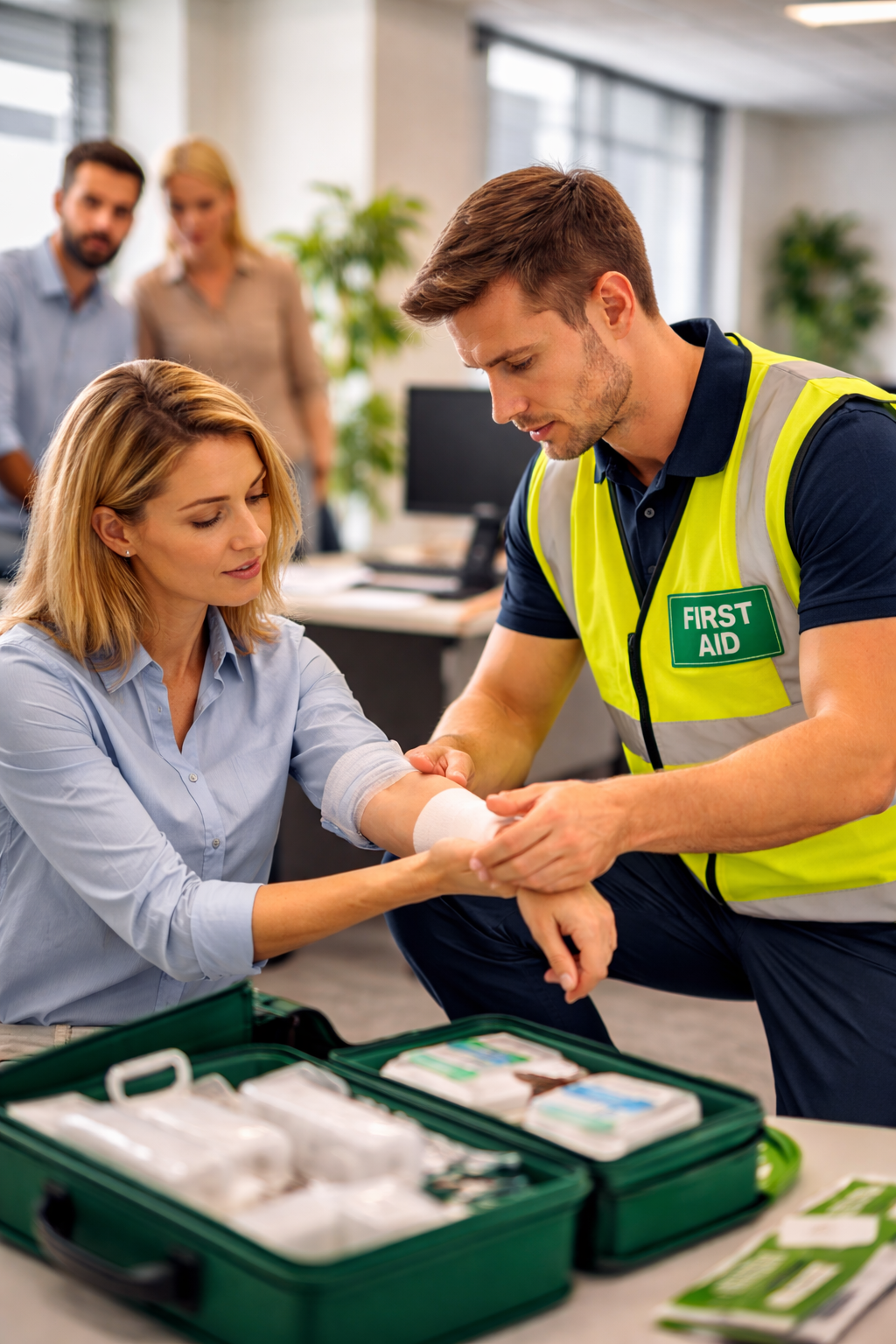
Accidents don’t wait—and neither should your response.
Whether it’s a minor cut, a sudden collapse, or a serious workplace incident, having a trained First Aid Officer in the workplace can make the difference between a quick recovery and a life-threatening situation.
So, why are First Aid Officers so essential? Let’s break it down clearly.
⚠️ What is a First Aid Officer?
A First Aid Officer is a trained staff member responsible for:
- Providing immediate medical assistance
- Managing workplace injuries and emergencies
- Coordinating emergency response until help arrives
👉 Most workplaces in Australia are required or strongly recommended to have trained first aid personnel.
🚑 1. Immediate Response Saves Lives
When an emergency happens, time is everything.
Without first aid:
- Brain damage can occur within minutes
- Minor injuries can escalate quickly
With a trained First Aid Officer:
- CPR can begin instantly
- Bleeding can be controlled
- Proper action is taken without panic
🧠 2. Reduces Panic & Brings Control
In emergencies, people panic—it’s natural.
However, a First Aid Officer:
- Takes control of the situation
- Gives clear instructions
- Keeps everyone calm and organised
👉 This alone can dramatically improve outcomes.
⚙️ 3. Critical in High-Risk Work Environments
Some workplaces have higher risks than others:
- Construction sites
- Warehouses
- Factories
- Gyms & fitness centres
In these environments, injuries are more likely—and faster response is crucial.
📉 4. Minimises Injury Severity
Quick first aid can:
- Prevent infections
- Reduce recovery time
- Stop conditions from worsening
👉 For example:
A simple burn treated immediately = minor injury
Untreated = potential hospital visit
📋 5. Helps Meet Workplace Safety Requirements
Workplace safety isn’t optional.
According to Australian guidelines:
- Employers must provide a safe work environment
- First aid readiness is a key part of compliance
👉 Refer to:
- Safe Work Australia
- training.gov.au
🧑🤝🧑 6. Builds a Safer Workplace Culture
Having trained First Aid Officers sends a strong message:
👉 “We care about safety.”
This leads to:
- More confident employees
- Better morale
- Increased trust within the team
⚡ 7. Essential for Cardiac Emergencies
Sudden cardiac arrest can happen anywhere—even at work.
A trained First Aid Officer can:
- Perform CPR immediately
- Use an AED correctly
- Increase survival chances significantly
🎯 Who Needs First Aid Officers?
Almost every workplace benefits, but especially:
- Offices
- Childcare centres
- Construction sites
- Retail stores
- Fitness centres
📈 The Real Impact
Workplaces with trained First Aid Officers experience:
- Faster emergency response
- Fewer severe injuries
- Improved safety compliance
- Greater employee confidence
FAQ Section❓
Not always mandatory, but strongly recommended under workplace safety guidelines.
It depends on workplace size, risk level, and number of employees.
Typically, a nationally recognised course like Provide First Aid (HLTAID011).
First Aid: every 3 years
CPR: every 12 months
Yes—any staff member can be trained and certified.
✅ Final Thought
Workplace emergencies are unpredictable—but your response doesn’t have to be.
Having a trained First Aid Officer means:
- Faster action
- Better outcomes
- Safer workplaces
👉 And ultimately, it could save a life.
🔥 Want to Take Action?
If your workplace doesn’t have a trained First Aid Officer yet—now is the time.
👉 Get certified quickly:
 Relevant Authority (Use These)
ABC First Aid (RTO 3399)
Nationally recognised training provider:
“Delivered in partnership with a nationally recognised training provider”
Training.gov.au
Official course standards:
“aligned with official course standards on training.gov.au”
ACECQA
ACECQA requirements:
“meeting ACECQA requirements for educators”
Australian Resuscitation Council
Australian Resuscitation Council guidelines:
“based on Australian Resuscitation Council guidelines”