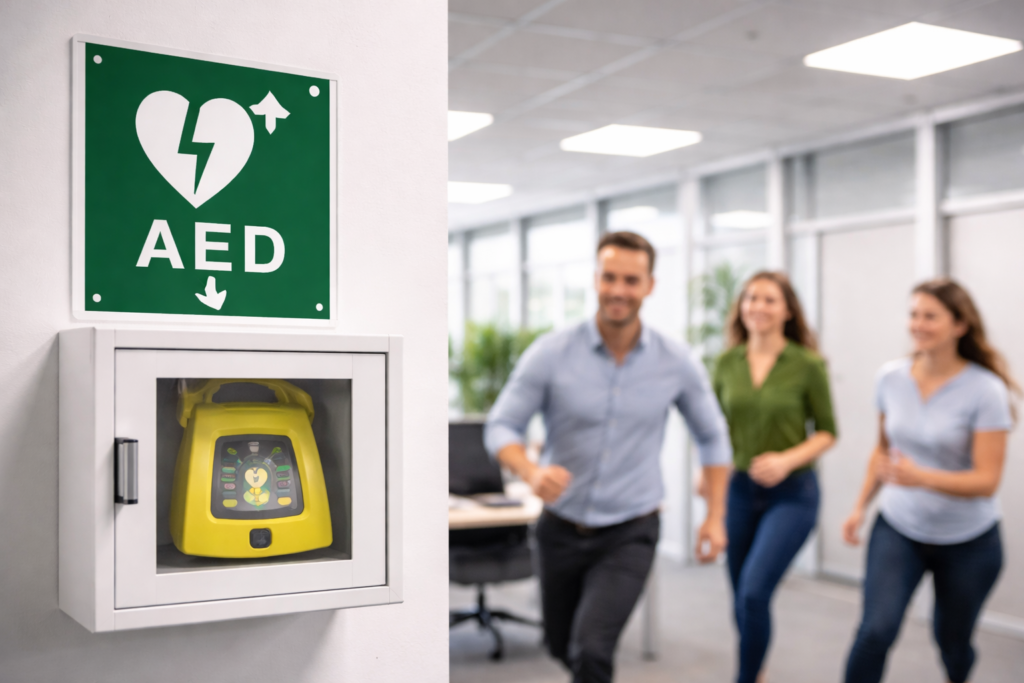
It’s a normal workday. Everything feels routine… until someone collapses.
Panic sets in. People look around.
👉 “Where’s the AED?”
No one knows.
That’s the problem—having an AED isn’t enough.
If it’s not placed correctly, it might as well not be there at all.
So, what are the actual AED placement rules for NSW workplaces?
Let’s break it down simply 👇
Firstly, in cardiac arrest:
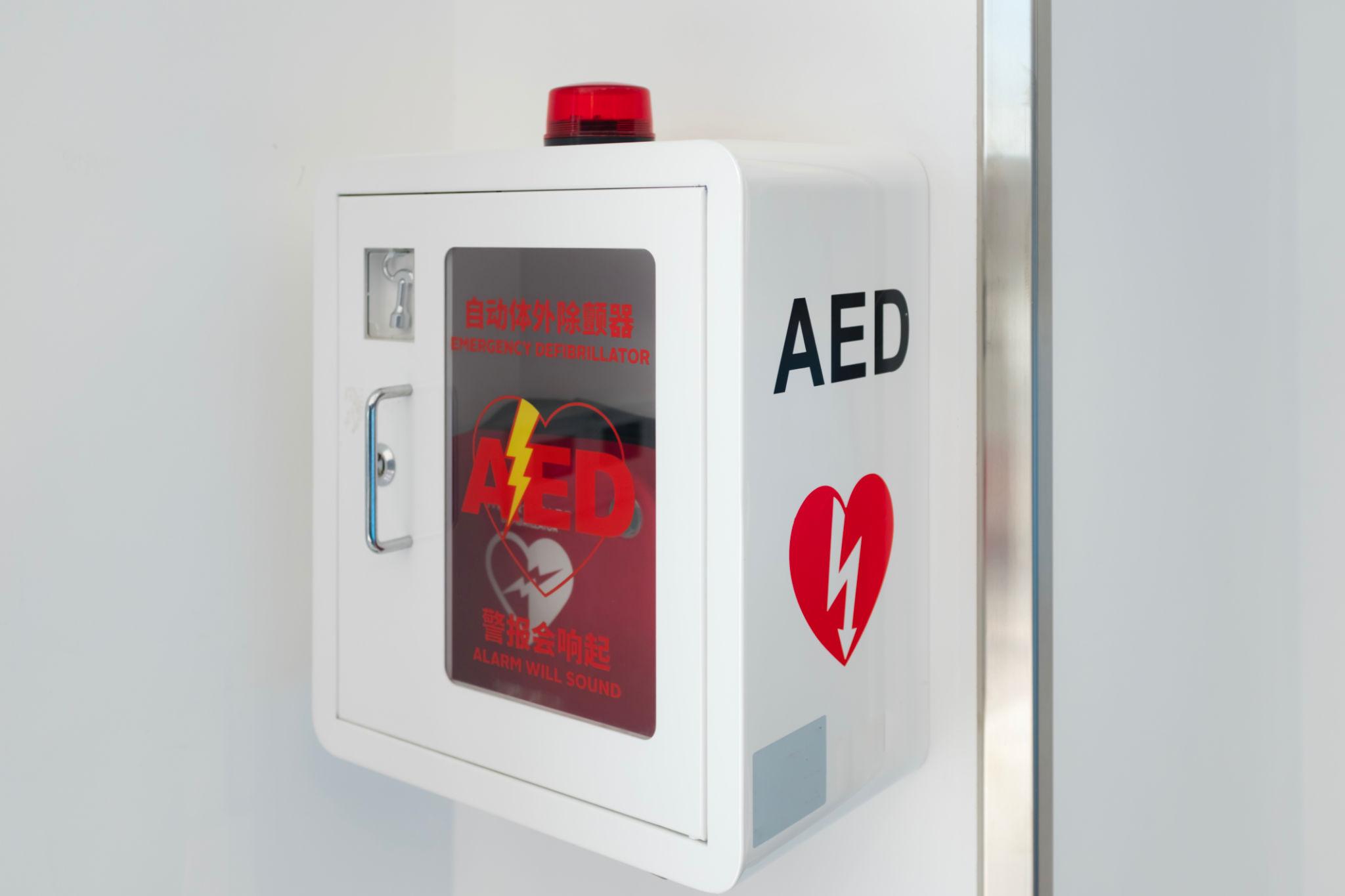
👉 An AED must be easy to find, easy to access, and ready to use
This is the most important rule.
👉 If people can’t reach it quickly, it defeats the purpose.
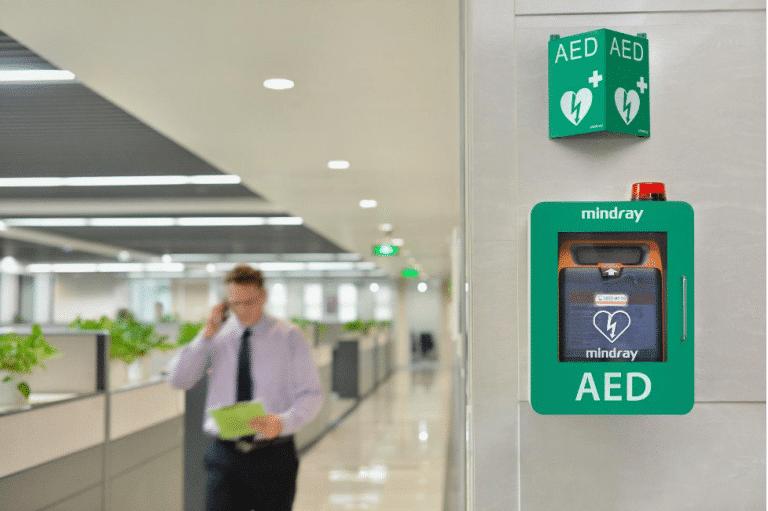
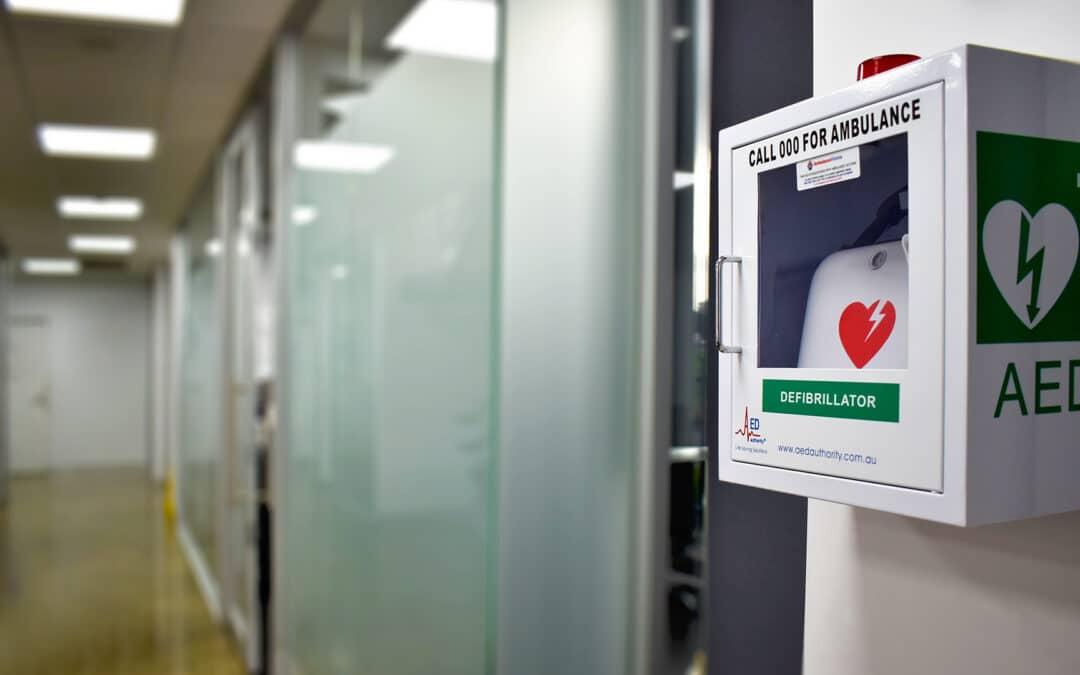
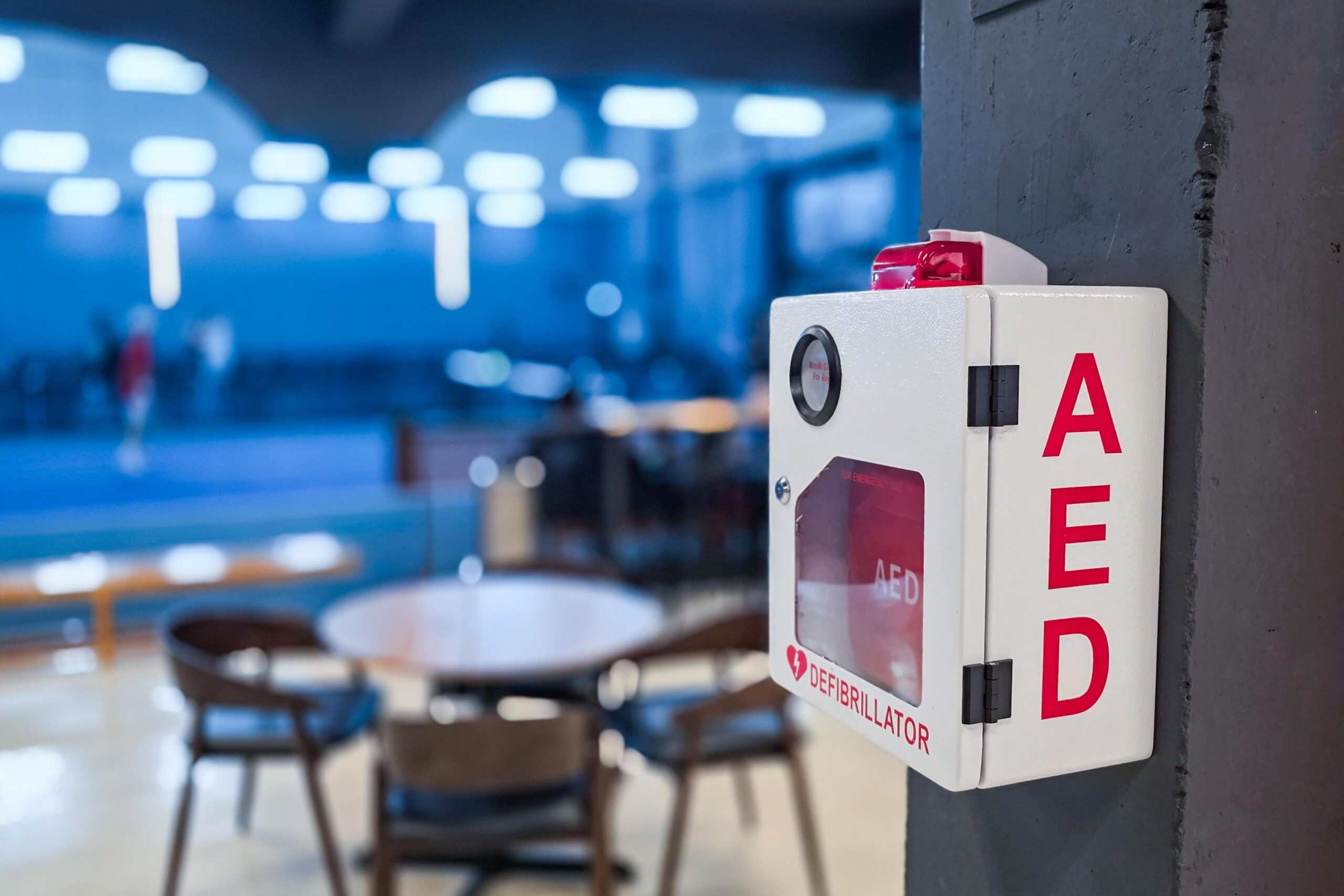
Secondly, visibility is key.
👉 In emergencies, people don’t have time to search.
.
Larger workplaces need multiple AEDs.
👉 The goal: reduce response time
Certain areas have higher risk:
👉 These areas should always have immediate AED access
Even perfect placement fails if no one knows about it.
👉 Awareness = faster response
An AED alone isn’t enough.
👉 Learn here:
CPR Course (HLTAID009)
First Aid (HLTAID011)
AED placement aligns with:
👉 While not always mandatory, AEDs are strongly recommended in workplaces.
An AED must always be ready.
👉 A faulty AED is useless in emergencies.
Not always, but highly recommended for safety compliance.
Central, visible, and easily accessible locations.
Depends on size—larger workplaces need multiple units.
Yes—AEDs are designed for public use.
Yes—CPR and AED training improves response outcomes.
Having an AED in your workplace is powerful—but only if it’s placed correctly.
Because in a real emergency, seconds matter.
👉 And the difference between life and death could come down to where your AED is located.
 Relevant Authority (Use These)
Nationally recognised training provider:
“Delivered in partnership with a nationally recognised training provider”
Official course standards:
“aligned with official course standards on training.gov.au”
ACECQA
ACECQA requirements:
“meeting ACECQA requirements for educators”
Australian Resuscitation Council
Australian Resuscitation Council guidelines:
“based on Australian Resuscitation Council guidelines”
