Heat Safety for Sydney Outdoor Workers: Stay Safe This Summer
Working outdoors in Sydney’s summer can be brutal. With temperatures often exceeding 35°C, outdoor workers face serious risks like heat exhaustion, dehydration, and heatstroke.
Therefore, understanding heat safety for Sydney outdoor workers isn’t just important—it’s critical for preventing life-threatening situations.
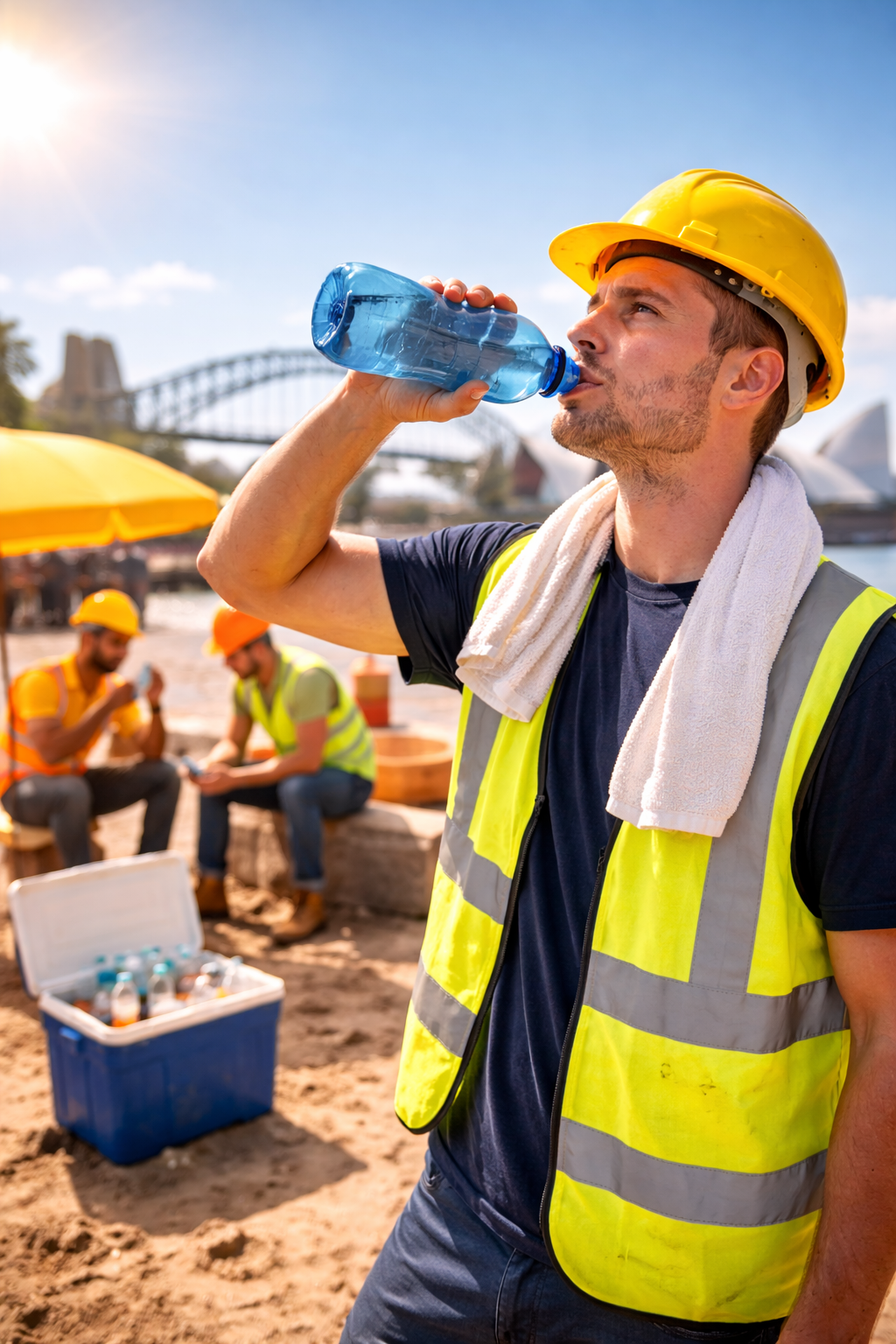
As temperatures rise across Sydney, outdoor workers face increasing risks. Therefore, understanding heat safety for Sydney outdoor workers is essential for preventing heat-related illnesses.
Firstly, dehydration is one of the most common issues. However, by drinking water regularly and taking breaks, workers can significantly reduce risk.
Moreover, wearing appropriate clothing and scheduling work outside peak heat hours further enhances safety.
In addition, proper first aid knowledge plays a crucial role. Consequently, workers trained in first aid can respond quickly and effectively to emergencies.
Ultimately, combining prevention strategies with proper training ensures a safer work environment across Sydney.
Firstly, Sydney’s climate combines high temperatures + humidity, which significantly increases heat stress risk.
As a result, outdoor workers in industries like:
are particularly vulnerable.
👉 According to workplace safety standards outlined on training.gov.au, employers must actively manage environmental risks such as heat.
.
Before diving into prevention, it’s important to recognise the risks.
👉 If untreated, heatstroke can be fatal.
Firstly, hydration is your strongest defence.
👉 Even if you’re not thirsty—keep drinking.
In addition, proper clothing reduces heat absorption.
👉 This helps regulate body temperature effectively.
Furthermore, timing matters.
👉 Small adjustments can significantly reduce risk.
Equally important, rest prevents overheating.
👉 This allows your body to recover.
However, prevention alone isn’t enough—you must also be prepared.
If someone shows signs of heat exhaustion:
If symptoms worsen → call 000 immediately
👉 Learn full first aid skills here:
Provide First Aid
👉 CPR training:
Provide CPR
Moreover, employers have legal obligations.
According to safety authorities:
👉 Refer to:
Additionally, those working in childcare or education settings must take extra precautions.
👉 Child Protection Course (Accredited)
👉 Ensures safety for both workers and children during extreme conditions.
To summarise, here’s a quick checklist:
Generally, anything above 35°C significantly increases heat risk, especially with humidity.
Heat exhaustion is less severe, while heatstroke is a medical emergency requiring immediate attention.
Every 15–20 minutes, even if not thirsty.
Yes. It ensures quick and effective response to heat-related emergencies.
Water, shade, rest breaks, and proper safety training.
Ultimately, heat safety for Sydney outdoor workers is about preparation, awareness, and action.
Because when temperatures rise, so do the risks.
👉 And with the right knowledge and training, those risks can be managed—and lives can be saved.
 Relevant Authority (Use These)
Nationally recognised training provider:
“Delivered in partnership with a nationally recognised training provider”
Official course standards:
“aligned with official course standards on training.gov.au”
ACECQA
ACECQA requirements:
“meeting ACECQA requirements for educators”
Australian Resuscitation Council
Australian Resuscitation Council guidelines:
“based on Australian Resuscitation Council guidelines”
