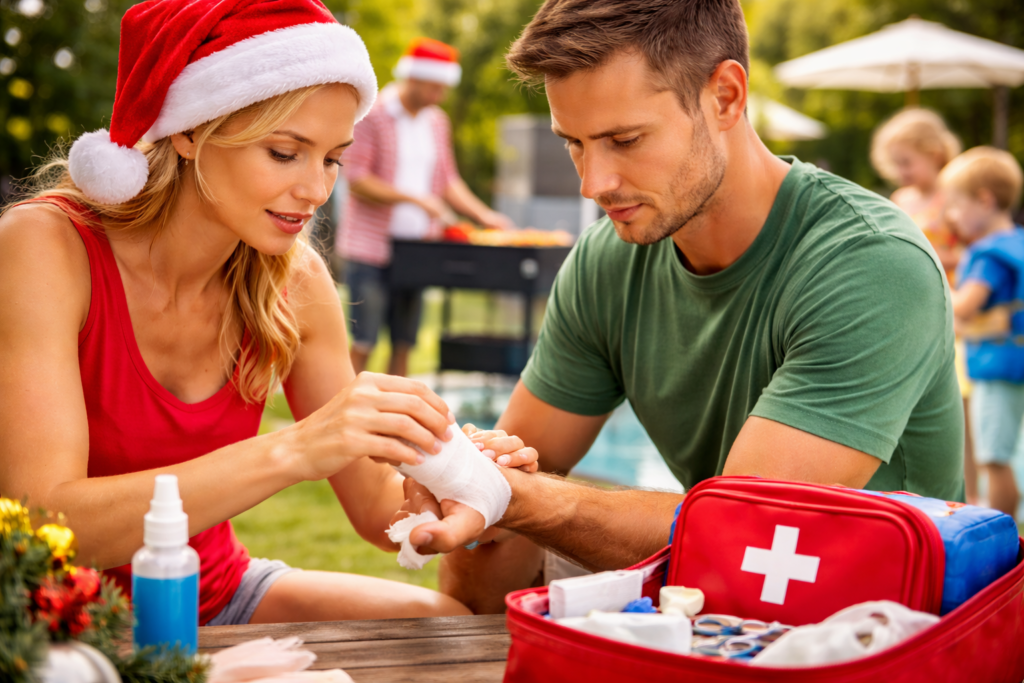
The Christmas holidays are a time of celebration, travel, and family gatherings—but they also come with a spike in preventable injuries and medical incidents. As we wrap up the festive season, it’s the perfect time to reflect on common risks and how simple first aid knowledge can make a critical difference.
During the Christmas period, there’s typically an increase in:
While most of these are manageable, knowing what to do in the first few minutes is what truly matters.
With more time spent cooking, burns are one of the most common injuries.
Quick First Aid:
👉 Avoid ice, creams, or butter—these can worsen the injury.
From carving knives to new kitchen gadgets, cuts happen fast.
Quick First Aid:
👉 Seek medical help if bleeding doesn’t stop after 10 minutes of pressure.
Sydney’s Christmas heat can be intense, especially during outdoor gatherings.
Signs to watch:
What to do:
👉 If symptoms worsen, it could progress to heatstroke—this is a medical emergency.
Large meals and distractions increase choking risks—especially for children and older adults.
First Aid Basics:
Backyard pools and beach trips are a holiday staple—but also a major risk.
Prevention + Action:
Most holiday injuries are preventable or manageable with basic first aid knowledge. The difference between panic and control often comes down to preparation.
As we head into the new year, consider this:
First aid training isn’t just a requirement—it’s a life skill.
The holidays may be over, but emergencies don’t take a break. Use this recap as a reminder to stay prepared, stay aware, and ensure you’re ready to act when it matters most.
