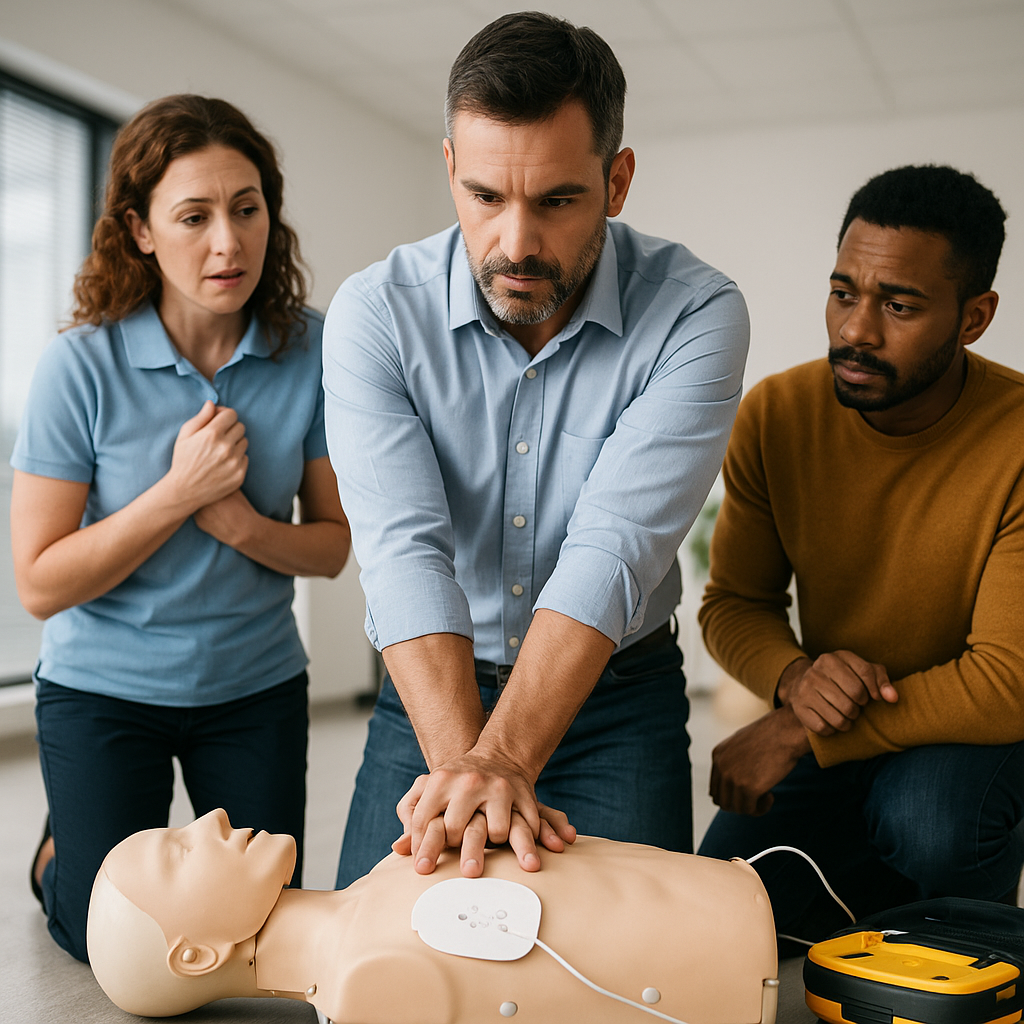
Achieving strong workplace CPR readiness in Sydney is essential for every business, regardless of size or industry. Because cardiac emergencies occur without warning, being properly prepared with AEDs, accredited CPR training, and structured emergency drills can dramatically increase survival outcomes. Moreover, a CPR-ready workplace not only improves safety but also fulfils NSW compliance expectations and boosts overall employee confidence.
In this comprehensive Sydney-focused guide, you’ll learn how to build a CPR-ready workplace, including AED installation, accredited CPR courses, WHS compliance, and effective response planning.
Sydney workplaces—from Parramatta to Bankstown, Liverpool, Campbelltown, and the CBD—experience thousands of medical emergencies every year. Because sudden cardiac arrest requires immediate action, improving your Sydney workplace CPR readiness is crucial.
When a business becomes CPR-ready:
Survival rates can increase by more than 70%
Staff respond faster and more confidently
WHS obligations are met
Parents, visitors, and customers feel safer
High-risk industries reduce liability
Additionally, cardiac emergencies often escalate quickly, so having trained responders on-site significantly reduces the severity of incidents.
The first major step toward achieving workplace CPR readiness in Sydney is ensuring your staff receive accredited CPR and First Aid training. According to SafeWork NSW, workplaces must have an appropriate number of trained first aiders based on risk level.
Accredited CPR course to refresh every 12 months.
Full first aid qualification required every 3 years.
Required for construction workers before entering a job site.
All Training NSW courses are delivered in partnership with ABC First Aid – RTO #3399, full ASQA compliance, and alignment with national standards listed on training.gov.au as well as ACECQA-approved requirements shown on acecqa.gov.au.
Because emergencies escalate rapidly, employees with CPR skills can:
Recognise cardiac arrest early
Perform high-quality compressions
Use an AED safely
Maintain confidence during an emergency event
CPR is the most critical component of any CPR-ready workplace.
A central part of AED workplace safety in NSW is ensuring your defibrillator is always accessible and operational. AEDs dramatically improve survival rates when used within the first few minutes of collapse.
In a visible, central location
Within 3 minutes’ access from any point
Free from obstructions
With large, clear signage
Near high-risk areas such as gyms, factories, construction zones, or childcare rooms
To maintain strong CPR preparedness in workplaces, check:
Electrode pad expiry dates
Battery status
Staff awareness of location
Accessibility during opening hours
Monthly visual inspections
Many Sydney organisations also incorporate AED demonstrations during their CPR training sessions for better familiarity.
Even after receiving accredited training, staff may hesitate during real emergencies unless they’ve practiced scenarios repeatedly. Therefore, running consistent drills significantly strengthens Sydney workplace CPR readiness.
Recognising an unconscious casualty
Calling 000 and reporting the emergency
Retrieving and operating the AED
Performing CPR
Communicating effectively with team members
Managing bystanders
Completing an incident report
Every 6 months for standard workplaces
Every 3 months for childcare, gyms, schools, and construction
Monthly in high-risk environments
By conducting structured drills, your business consistently improves CPR readiness and emergency performance.
To fully establish CPR emergency readiness, every Sydney workplace should maintain a documented emergency plan that outlines:
AED location
Names of trained first aiders
Communication procedures
Evacuation paths
Emergency contact list
WHS responsibilities
Post-incident reporting
This plan should be reviewed at least once per year and given to all new staff as part of induction.
Sydney workplaces must follow several national and state guidelines when building a CPR-ready workplace.
✔ Training.gov.au
National training standards for HLTAID units
Required training for childcare and education services
Our nationally recognised training partner
By following these guidelines, workplaces strengthen safety culture, reduce legal risk, and ensure that staff receive training that meets national expectations.
Ultimately, building a truly CPR-ready workplace in Sydney requires a combination of accredited training, accessible AEDs, regular emergency drills, and a clear emergency response plan. With the right preparation, your team will respond confidently and effectively whenever a cardiac emergency occurs.
Training NSW provides accredited CPR and First Aid training across all Sydney regions, delivered by qualified trainers in partnership with ABC First Aid – RTO #3399.
Most workplaces need staff trained in HLTAID009 Provide CPR, refreshed every 12 months.
Most workplaces require at least one AED accessible within three minutes from all major work areas.
Yes, Sydney childcare centres must complete ACECQA-approved First Aid, CPR, anaphylaxis, and emergency management units.
At least every 6 months, but high-risk sectors should conduct drills more frequently.
AED maintenance is minimal—mostly pad and battery replacements every few years.